
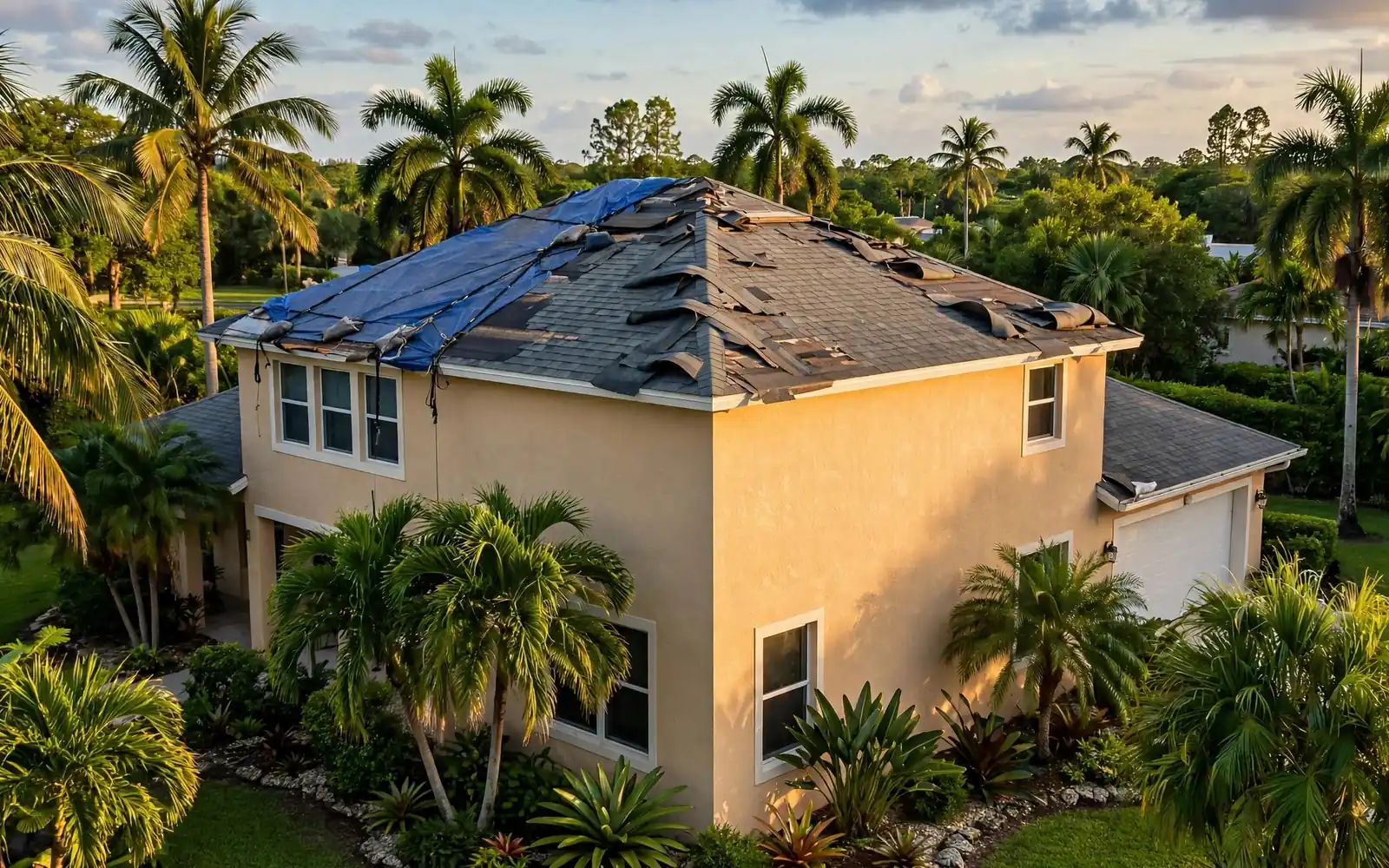
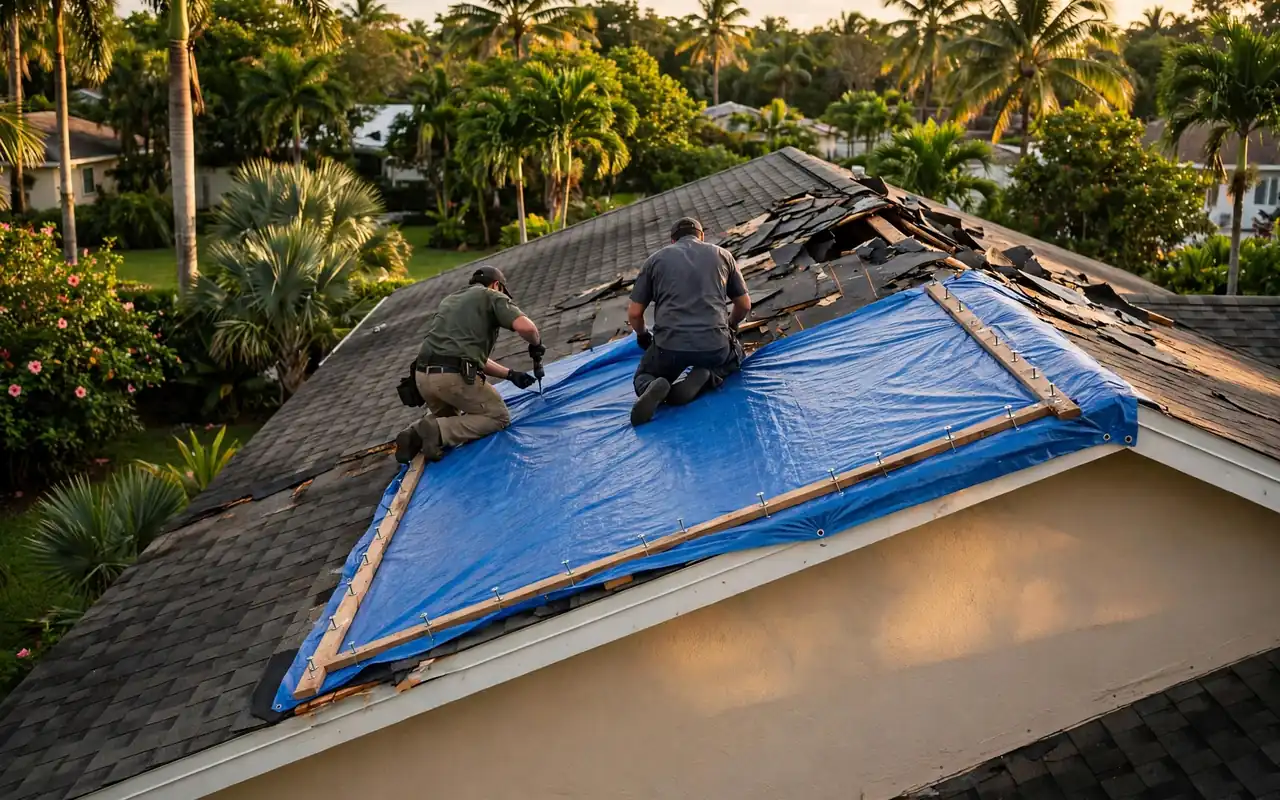
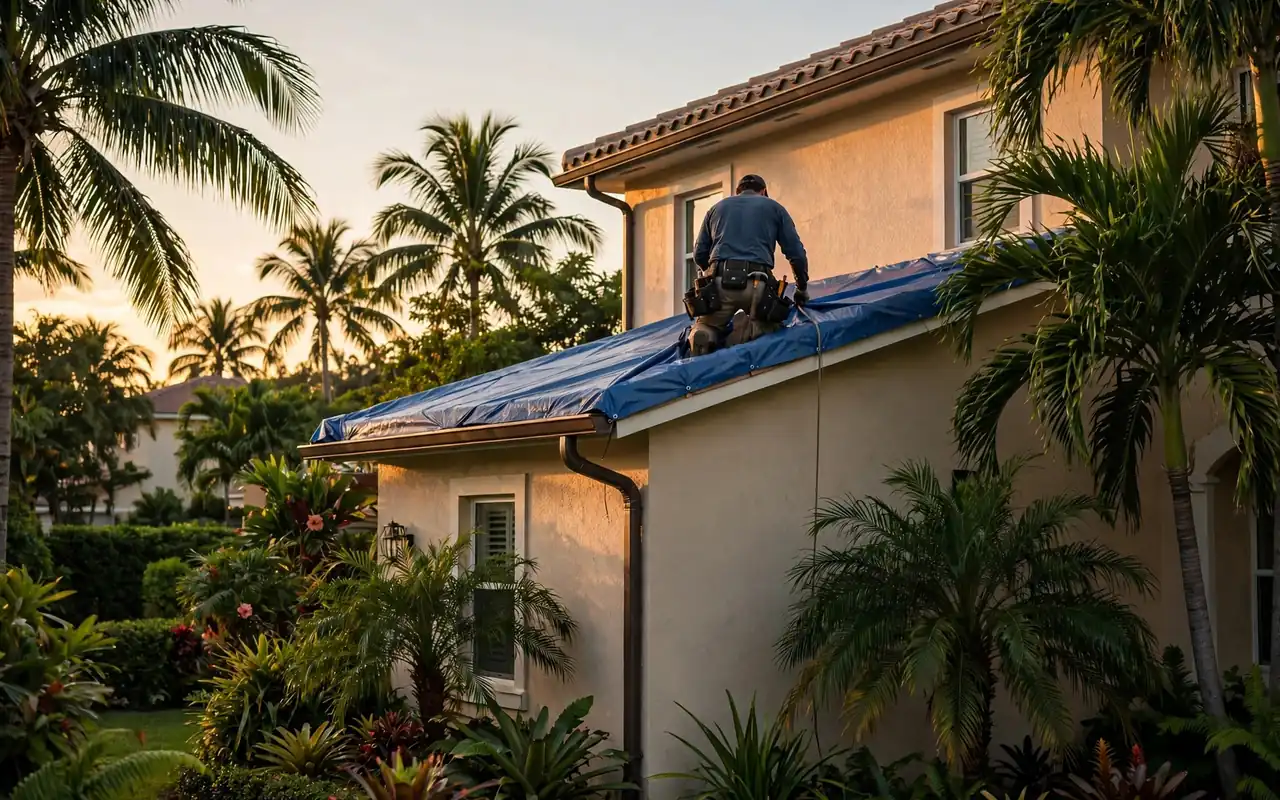
- Securing the roof after a storm
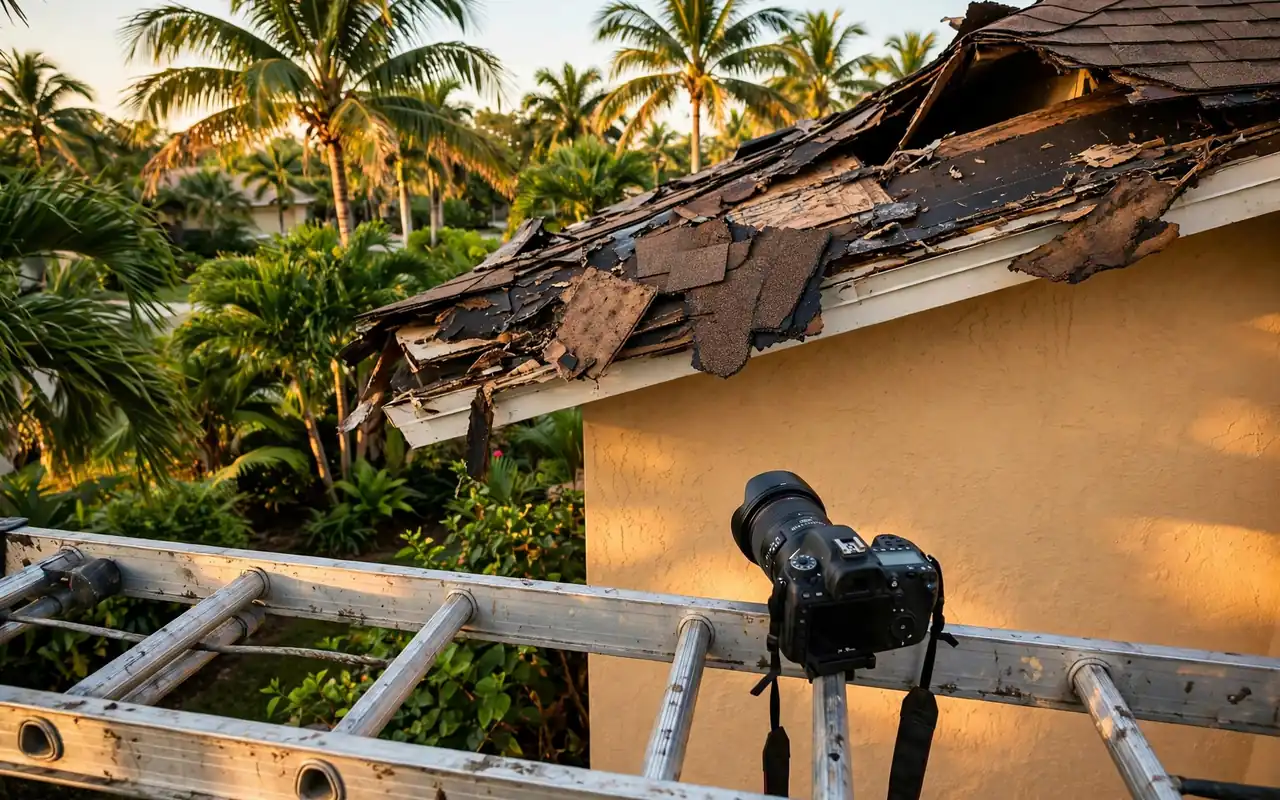
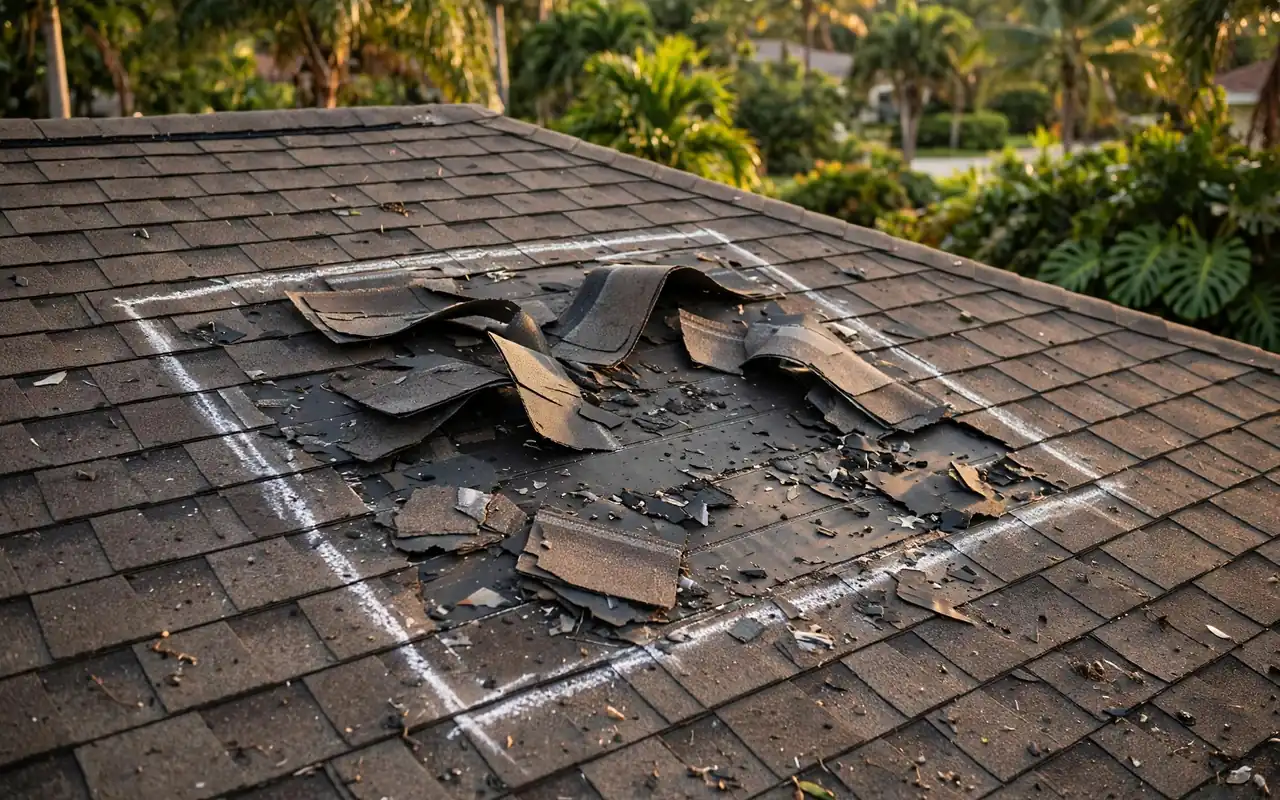
- Documenting damage for insurance
- Written scope before work begins
Storm Damage Roof Repair in Palm Beach County
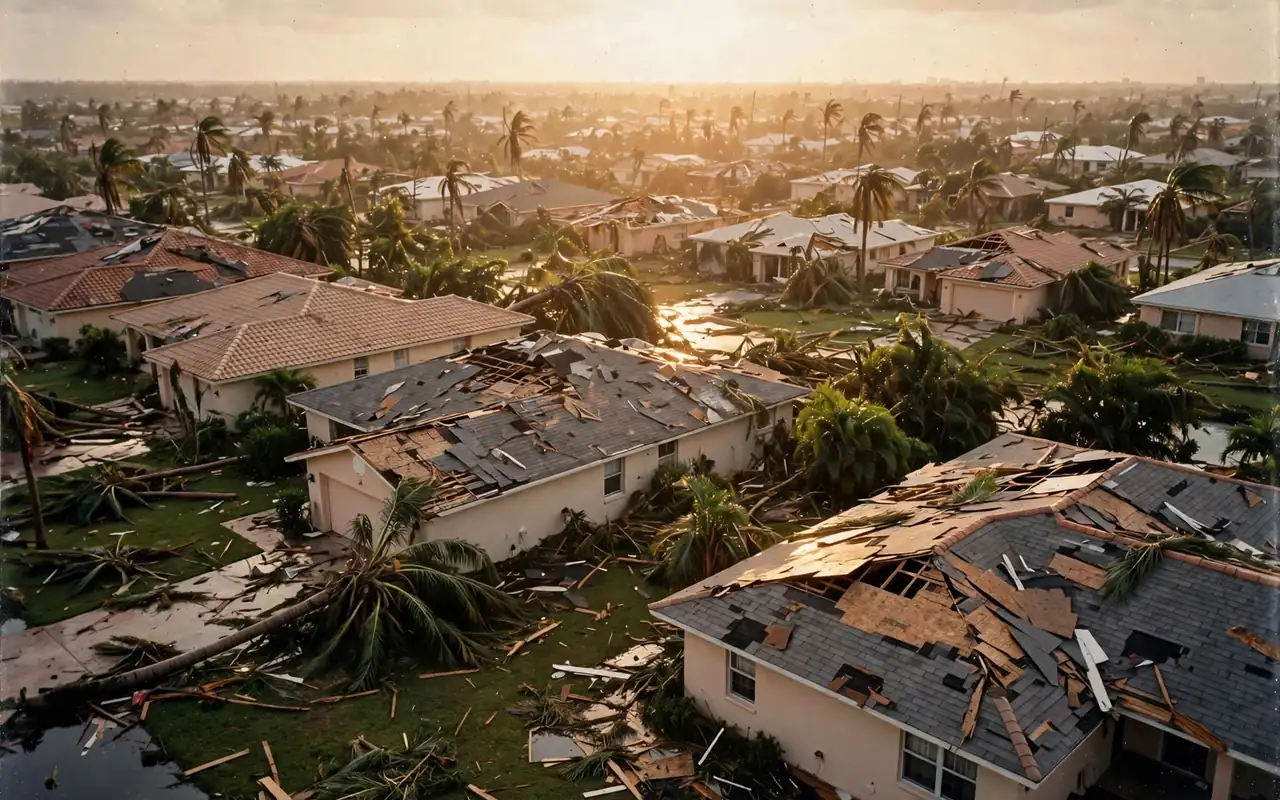
Palm Beach County measures its roof history in storm names. Hurricane Wilma, on October 24, 2005, damaged more than 55,000 homes in this county. Hurricane Irma, in September 2017, produced 40,754 insurance claims here, and more than 15,000 of those claims closed without payment. Those numbers explain the two halves of every post-storm roof call in this county: the damage itself, and the documentation that decides how the damage gets treated afterward. Palm Beach Roofing Help connects homeowners with roofers who handle both halves.
First moves when the storm passes
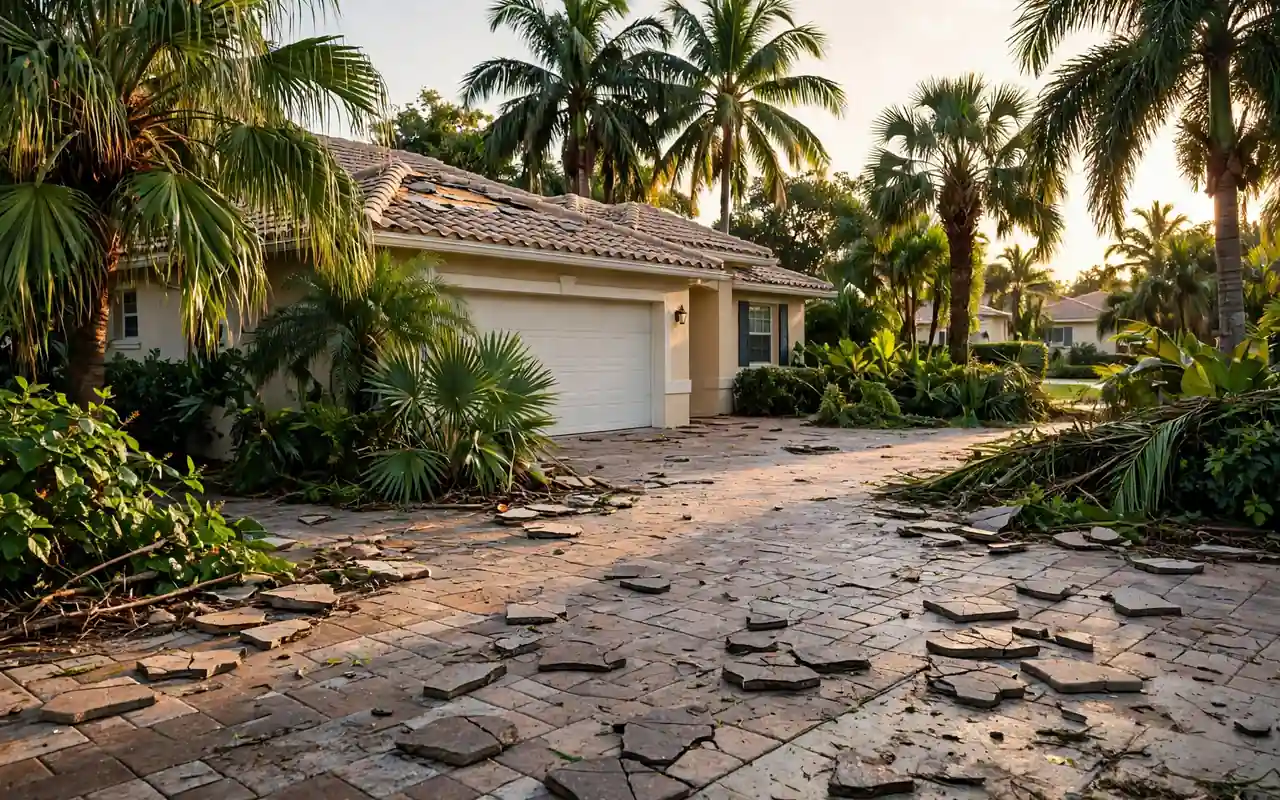
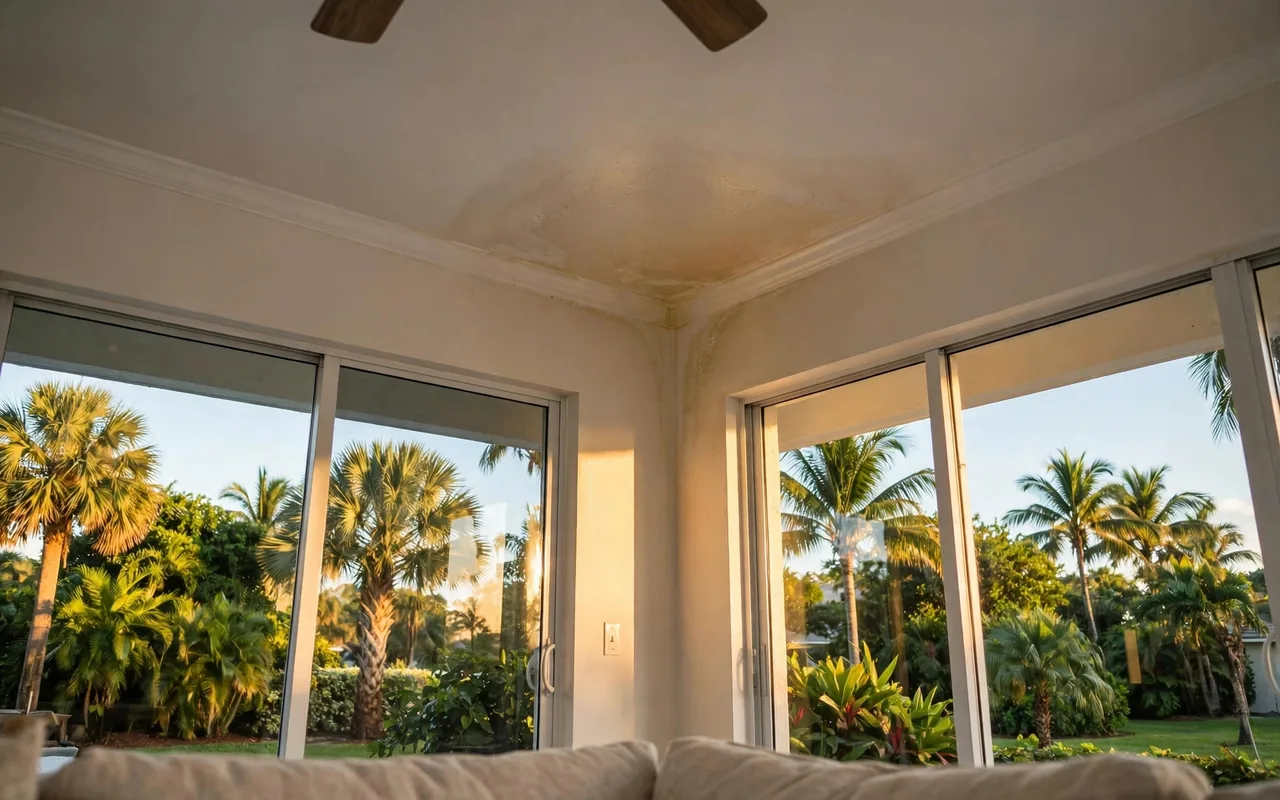
Safety leads. Stay clear of downed lines and unstable limbs, and keep people out of rooms under bulging or sagging ceilings. When the roof is open to the sky, securing the opening comes next: a properly fastened temporary cover keeps the next rain band from turning one damaged slope into several damaged rooms. Then photograph everything, from the ground where possible: lifted and missing shingles, cracked and scattered tile, bent vents, debris impacts, and the interior stains as they appear. Date those photos. They anchor every later conversation.
Some storm damage only shows up weeks later
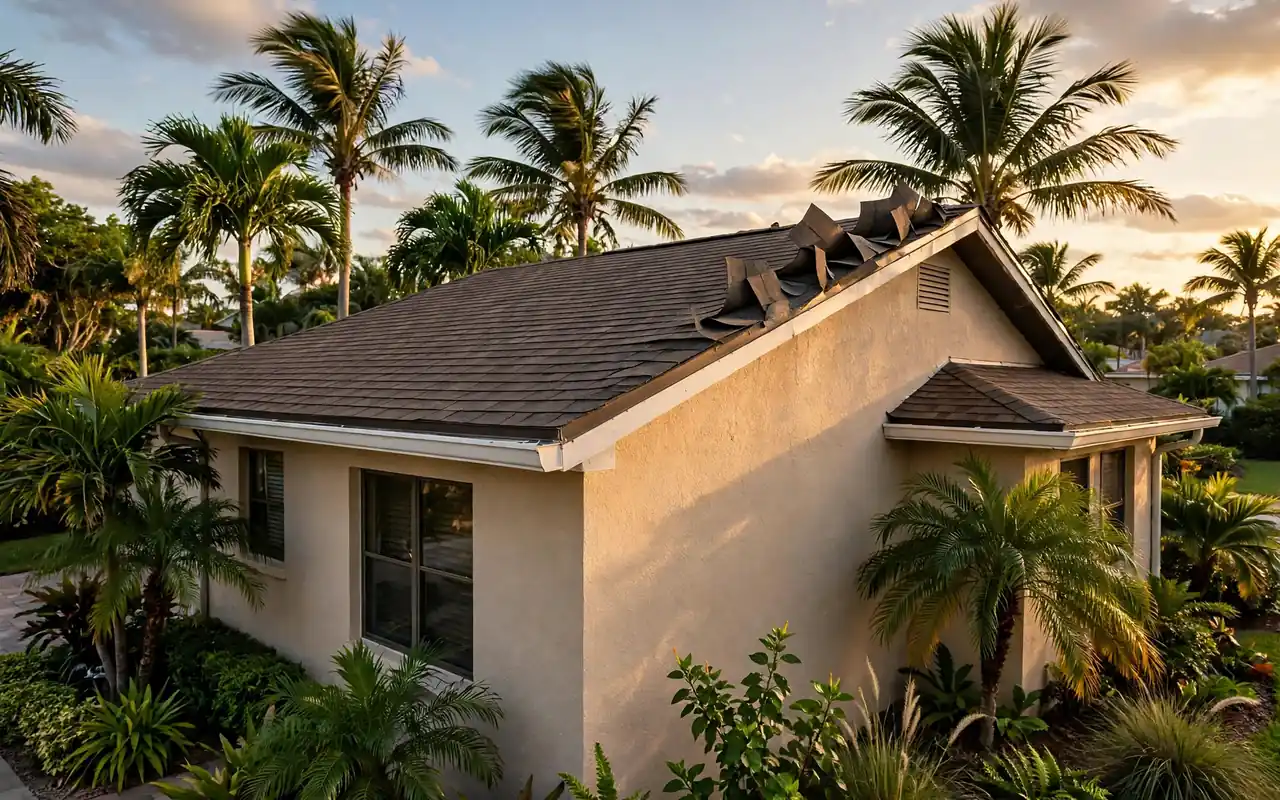
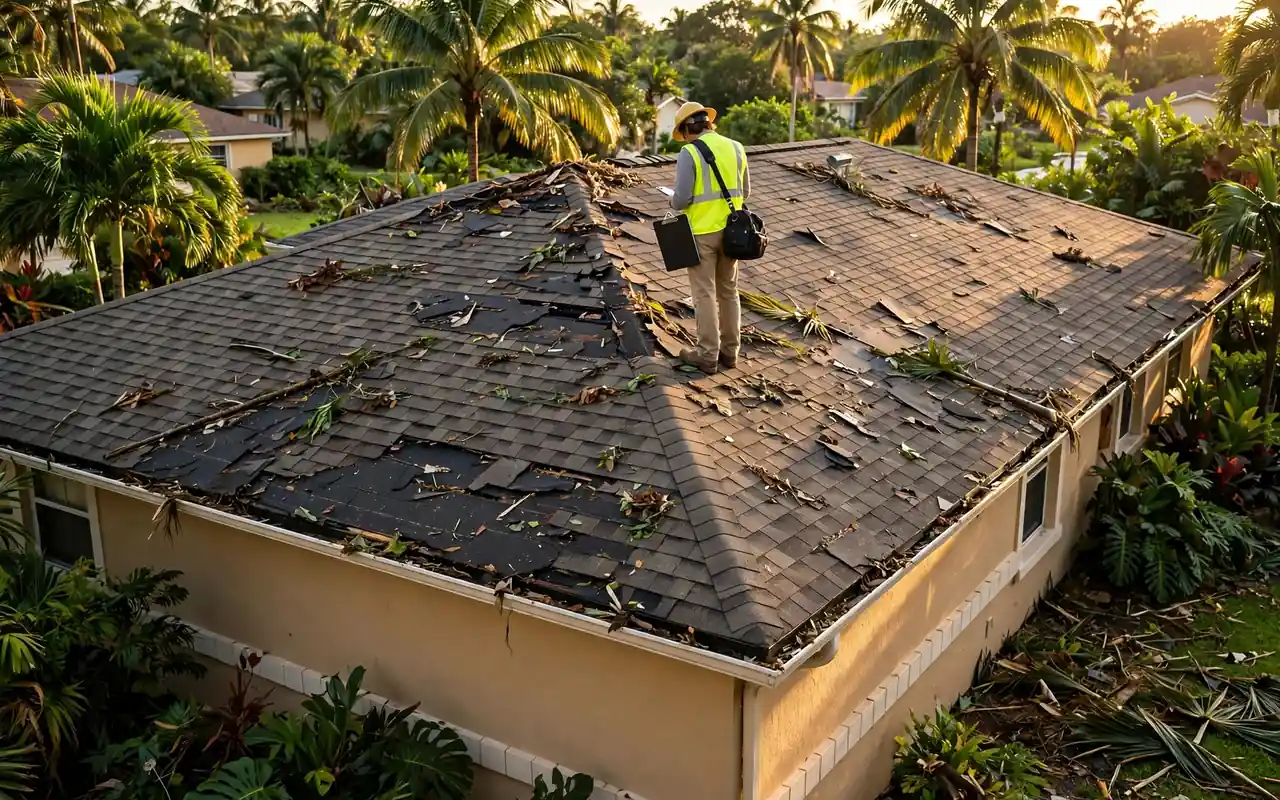
Some storm damage performs immediately. Much of it waits. Lifted shingle tabs reseat themselves to the eye while their seal is broken. Tile systems lose fastening in ways a street view never shows. Underlayment compromised in September can leak quietly until a December rain finds the path, which is the pattern Wellington and Delray Beach homeowners described after Irma: slow stains arriving weeks later. A post-storm inspection of the full roof, with photos, separates storm damage from age wear and catches the quiet failures while they are still small.
Repair decisions after a storm
Contained storm damage on a sound roof is a repair: a slope section of shingles, a run of cracked tile, a vent and its flashing. Two frameworks shape bigger cases. Florida's 25 percent rule can bring current code into play when repairs pass a quarter of the roof, turning a large repair into a re-roof decision. And the roof's pre-storm condition matters: a young roof with storm damage and an old roof with storm damage receive different scopes. The inspection sorts storm effects from wear, in writing, so the scope you agree to matches the roof you own.
Storm damage and insurance, in plain terms
Insurance generally responds to sudden damage from a covered event, and storm damage is the classic case. The county's Irma record, with so many claims closed without payment, teaches a documentation lesson rather than a cynical one: clear photos, a dated inspection report describing the damage and its likely cause, and a written repair scope give a claim its best footing. Keep your own copies of everything, and describe the storm and its date precisely when you call.
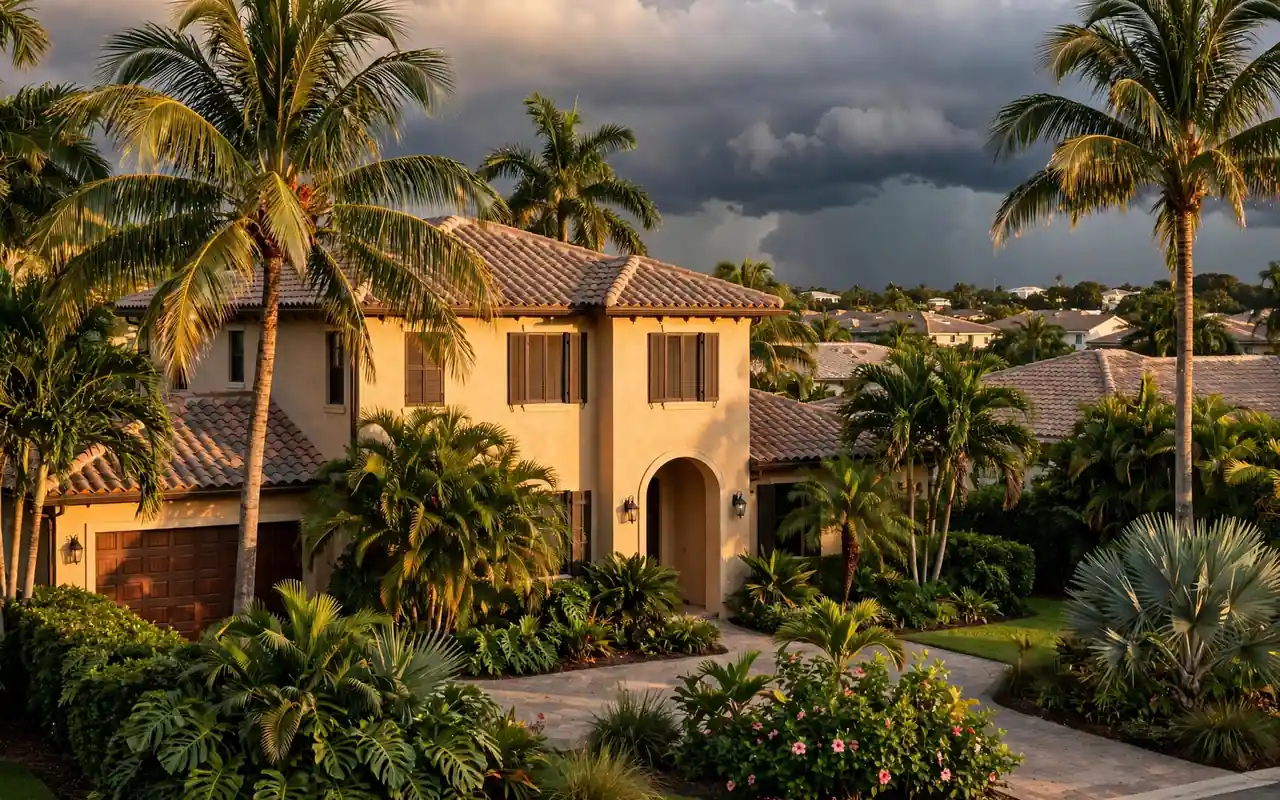
Hurricane season runs June 1 to November 30. Repairs and inspections completed in the calm months are practical storm preparation for a roof, since lifted tabs sealed in April cannot lift in September.
Frequently asked questions
What should I do first after a storm damages my roof?
Keep people safe and out from under damaged ceilings, then get the opening secured with a temporary cover when the roof is open. Photograph all visible damage with dates, inside and out, and call with the storm date and a room-by-room description of leaks.
Does homeowners insurance cover storm roof damage in Florida?
Insurance generally responds to sudden damage from a covered storm event. Outcomes depend on the policy and the documented damage, which is why dated photos and an inspection report matter. Palm Beach County's Irma experience showed many claims closing without payment, and thorough documentation is the homeowner's strongest contribution to a different result.
How do I know whether storm damage is a repair or a replacement?
The inspection weighs the damaged area against the whole roof's condition. Contained damage on a sound roof repairs well. Damage spread across slopes, or damage landing on a roof already at its end, points toward replacement. Florida's 25 percent rule also shapes larger repairs.
My roof looks fine from the street. Could it still be damaged?
Yes. Lifted tabs, broken seals, slipped tile fastening, and underlayment damage all hide from ground view. Slow leaks appearing weeks after a storm are the classic sign. A post-storm roof-level inspection is the reliable check.
How much does storm roof repair cost?
Scope drives everything: a vent and flashing, a shingle section, and a tile slope are very different jobs, and materials run from shingles through tile and metal. Ask on the call for an inspection and a written scope tied to the documented damage.
Should I wait for my insurer before repairing anything?
Securing the roof against further water entry protects the home and the claim alike, and it should not wait. Permanent repairs benefit from documentation first: photos and an inspection report created before the work begins. Describe your situation on the call, and a roofer can sequence cover, documentation, and repair sensibly.
When is the best time to handle storm repairs?
As soon as safely possible after the event for securing and documentation, and in the calm season for permanent work when the damage allows waiting. Hurricane season runs June 1 to November 30, and roofs repaired in spring enter it in their best condition.
When you call, give the storm date and describe the damage
Tell the storm's date, what you can see, and where the water is going. The roofer handles the roof-level truth from there.
Questions about a roof, a letter, or a deadline start with a call.
Call Now{{TRACKING_NUMBER}}