
- Active leaks and storm openings
- Securing the roof and stopping the water
- Written scope before work begins
Emergency Roof Repair in Palm Beach County
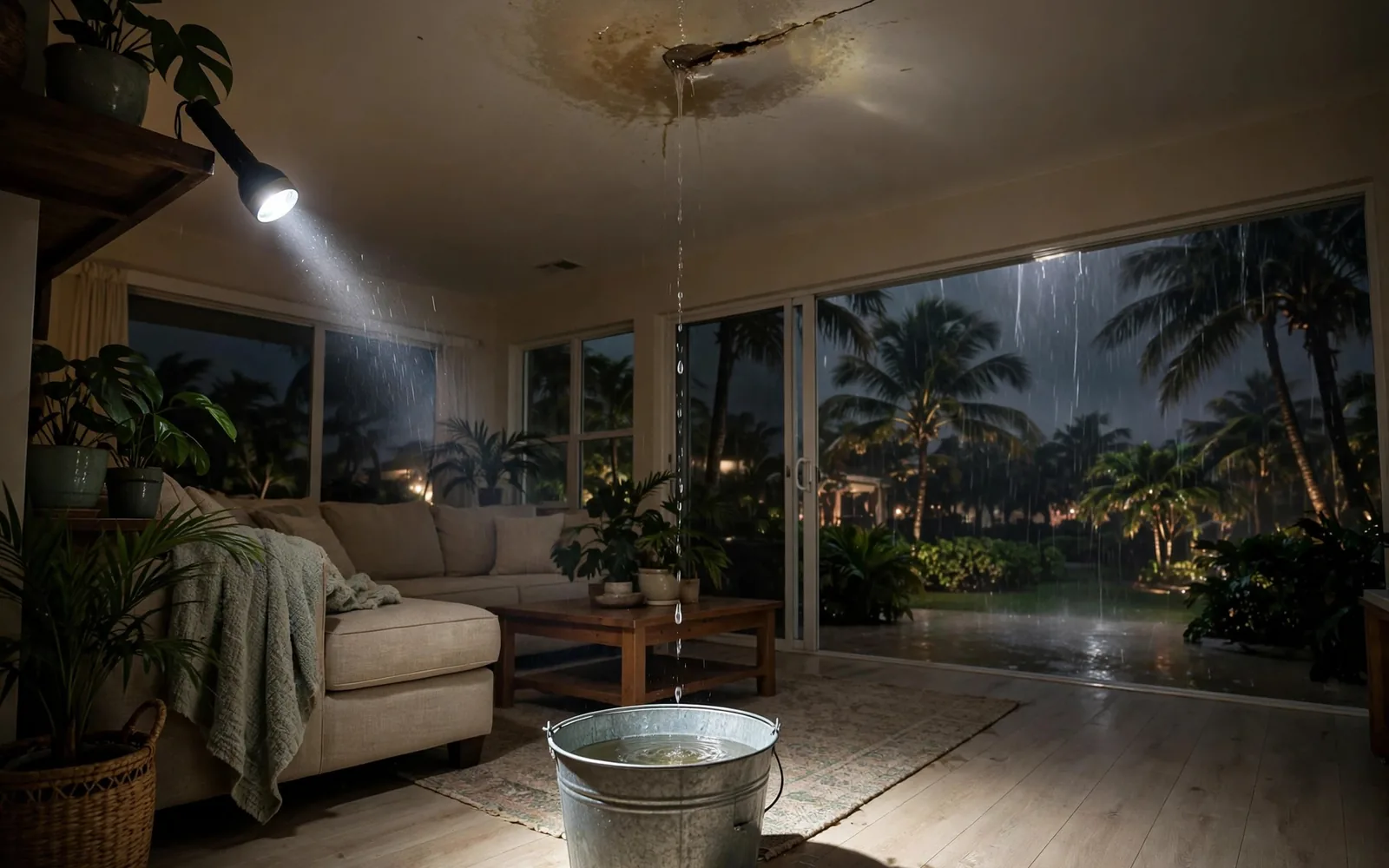
Some roof problems can wait for business hours. An active drip at midnight during a storm cannot. This page is for that moment: water entering now, a ceiling bowing under the weight of it, a section of roof opened by wind or a fallen palm. Palm Beach Roofing Help connects homeowners with roofers who take emergency calls across the county, and the guidance below covers the first hour, before anyone climbs anything.
The first hour, inside the house
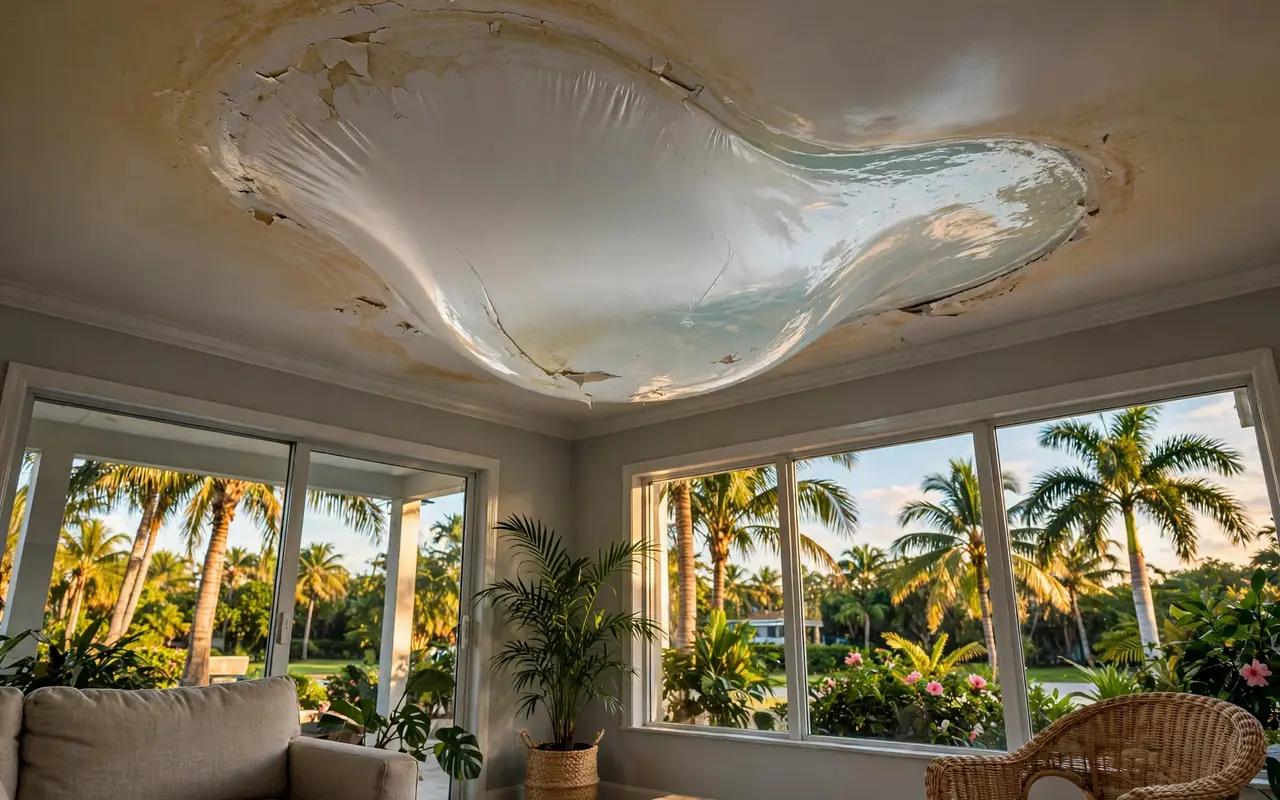
Protect people first. Keep everyone out from under a bulging or sagging ceiling. Water pooled in ceiling paint adds real weight, and a section can release without warning. Move furniture and electronics out of the drip zone, and set buckets under active drips.
Respect electricity. Water near fixtures, outlets, or panels calls for distance and caution. When water and wiring meet, treat the room as off limits until things dry or a professional says otherwise.
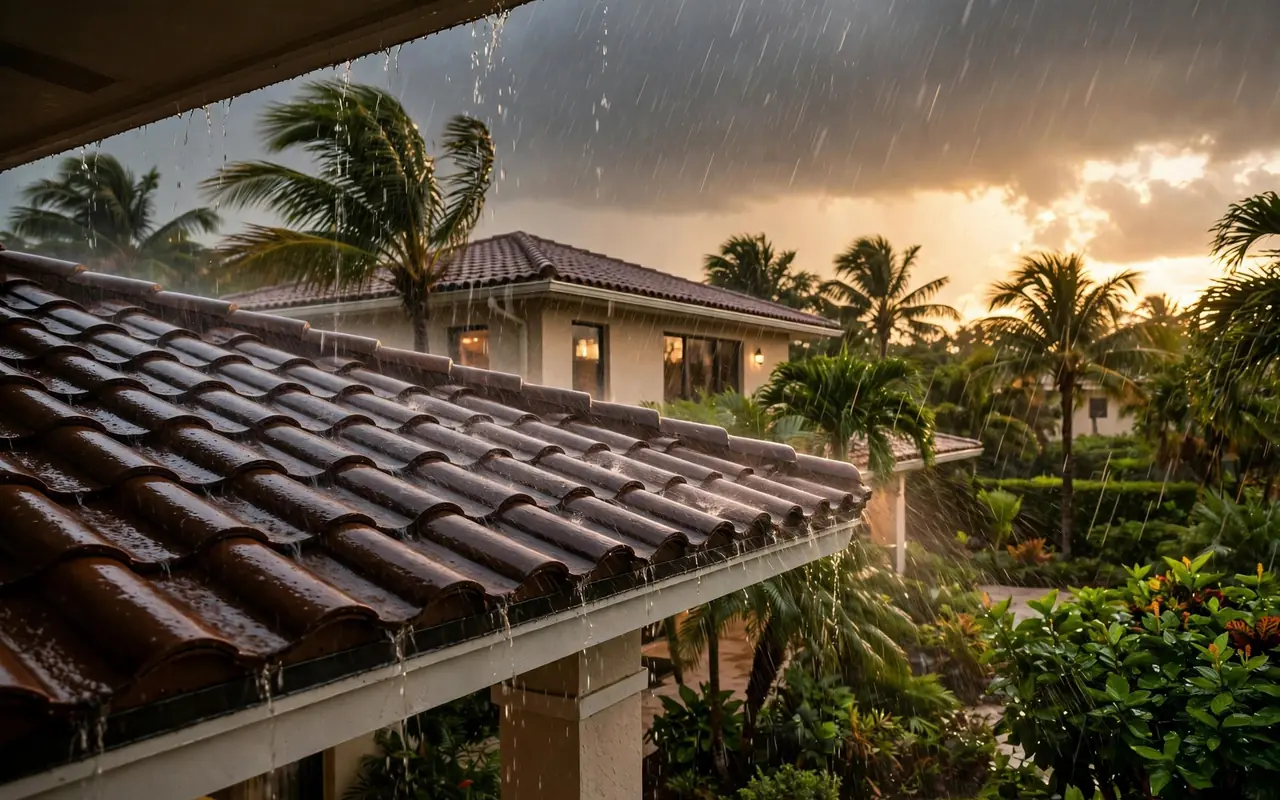
Leave the roof alone during the storm. Wet roofs and ladders in wind are a dangerous mix, and storm gusts arrive in bands. Emergency roof work happens in safe windows: as a storm clears, at first light, or between bands when a roofer judges it safe. Your job during the worst of it is the inside work above.
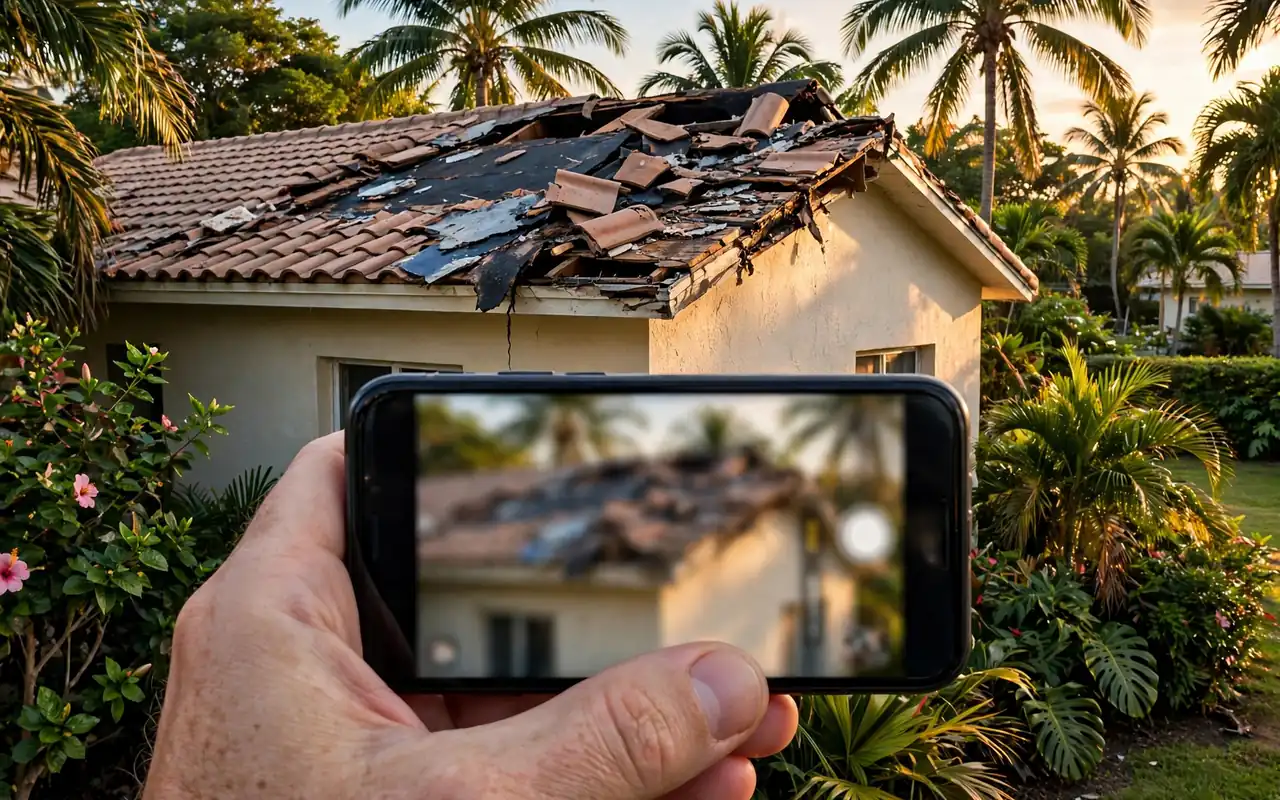
Photograph as you go. The drip, the stain spreading, the damaged slope from the ground when light allows. Dated photos serve the repair call and every insurance conversation afterward.
What emergency repair actually does
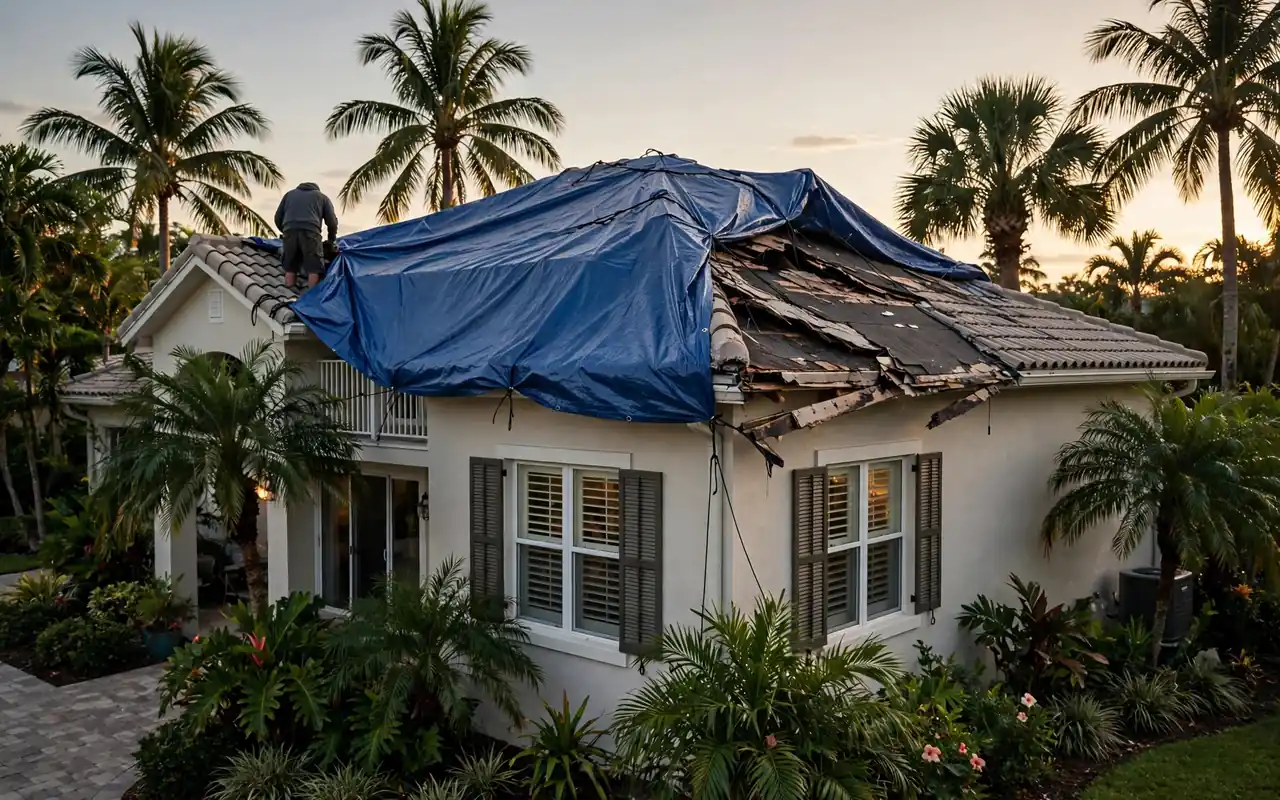
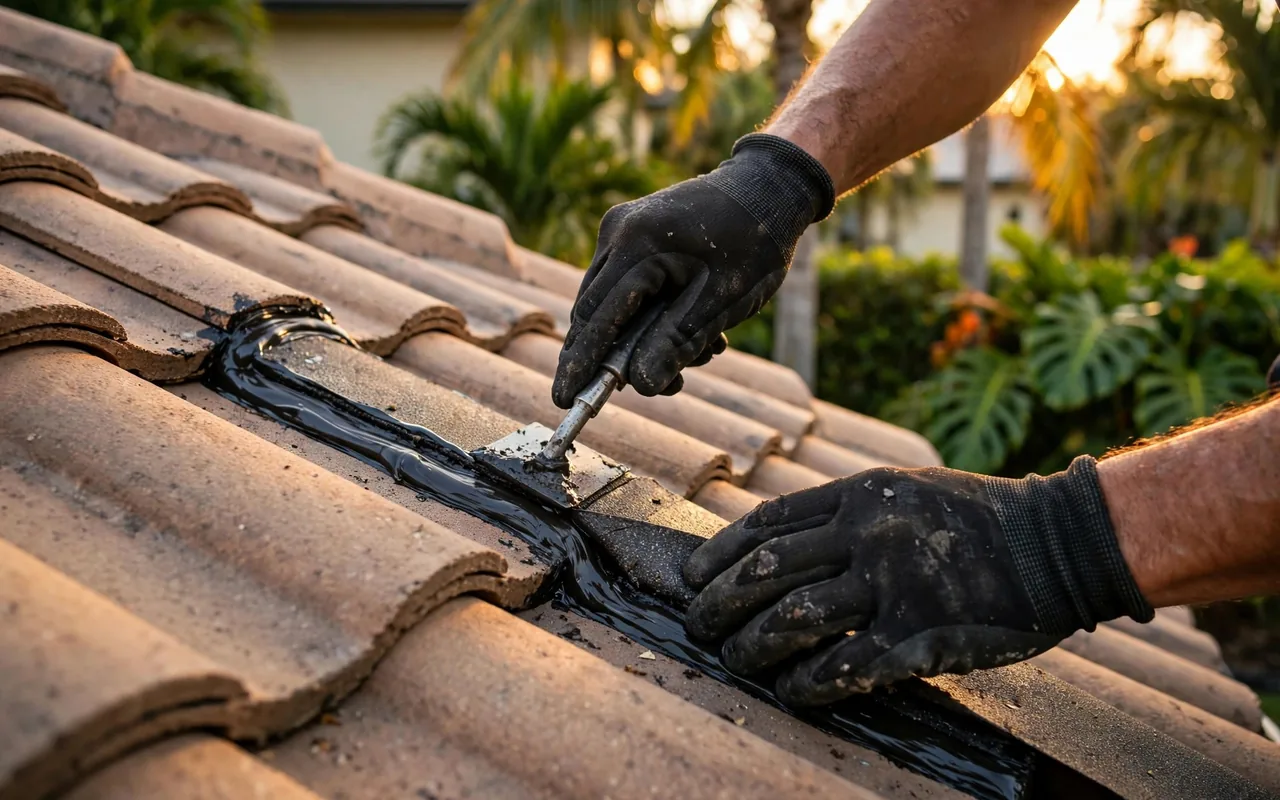
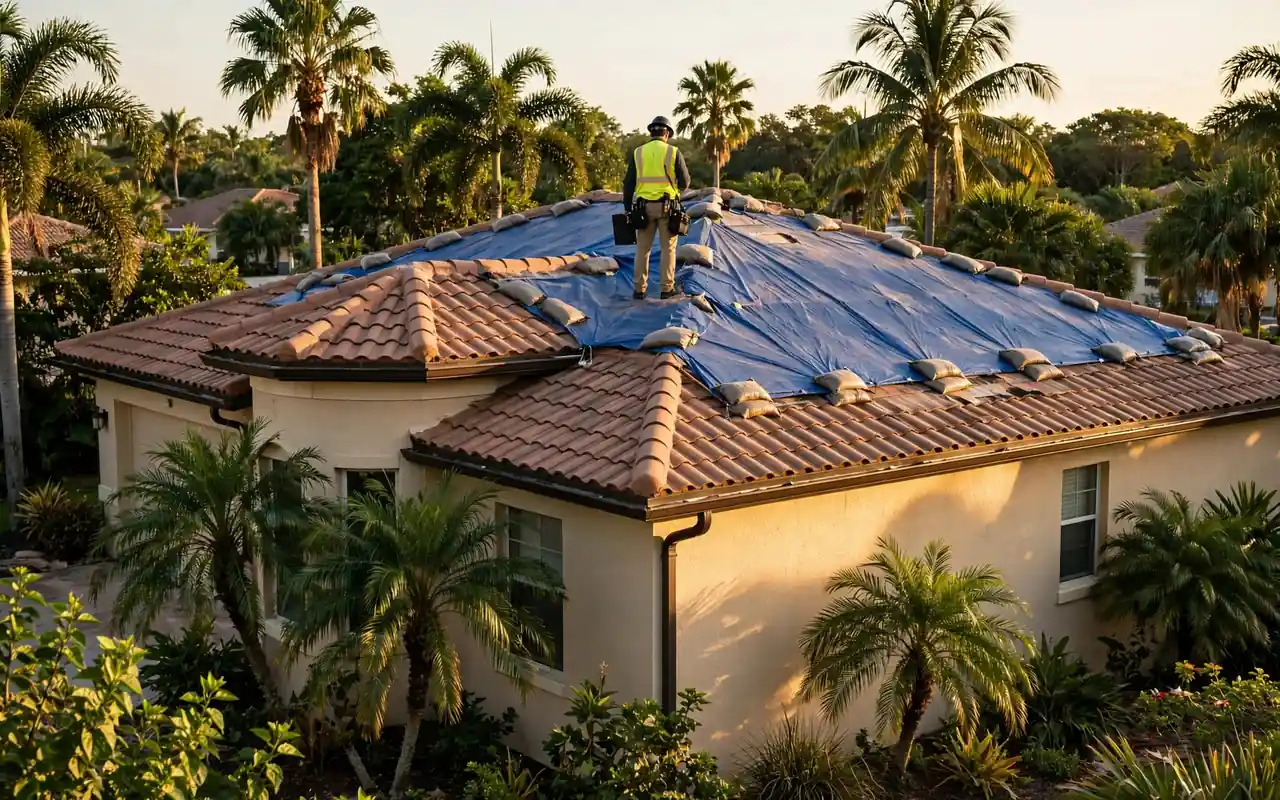
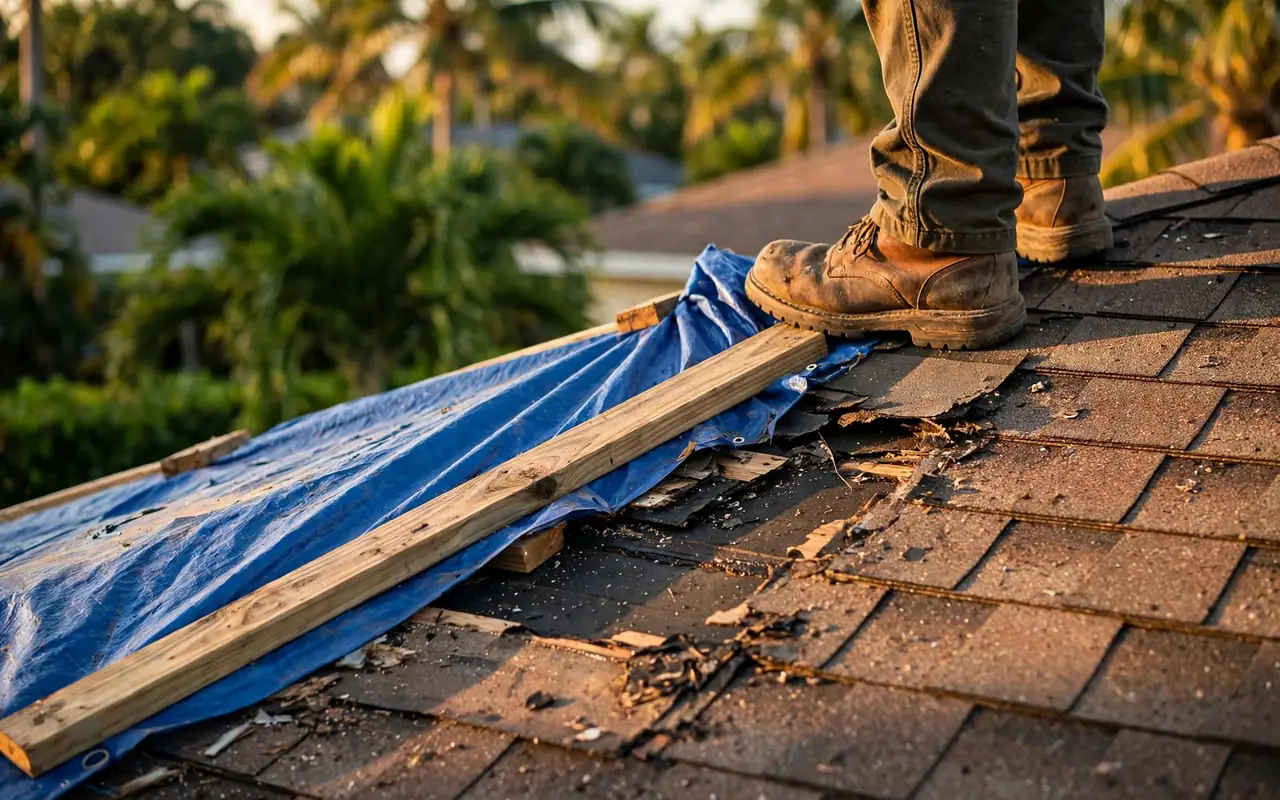
The emergency visit has one goal: weather-tight. A roofer secures the opening with a properly fastened temporary cover, corrects an immediate failure such as a lifted vent or torn section where conditions allow, and confirms the rest of the roof is not feeding the same leak. That stabilization buys dry rooms and time. The permanent scope gets decided afterward, in daylight, with the full roof inspected and the options in writing.
The morning after: check the damage in daylight
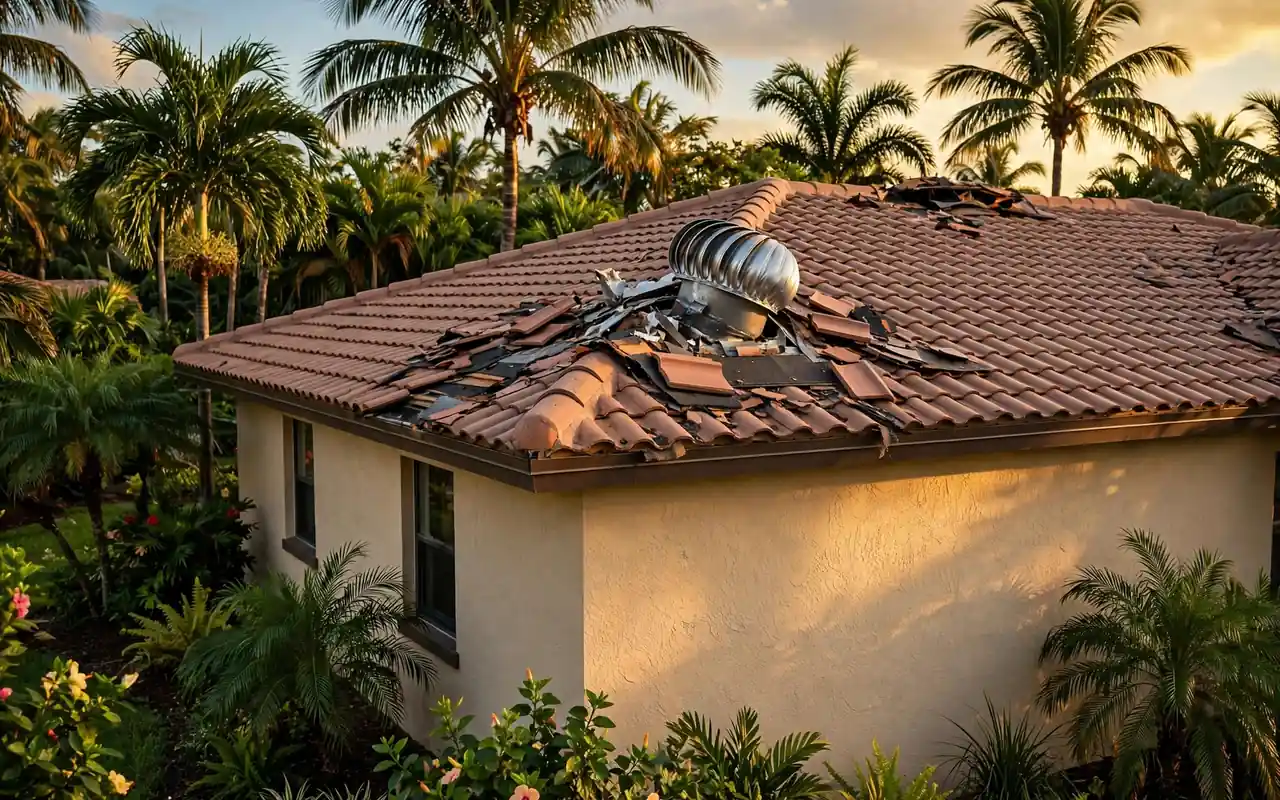
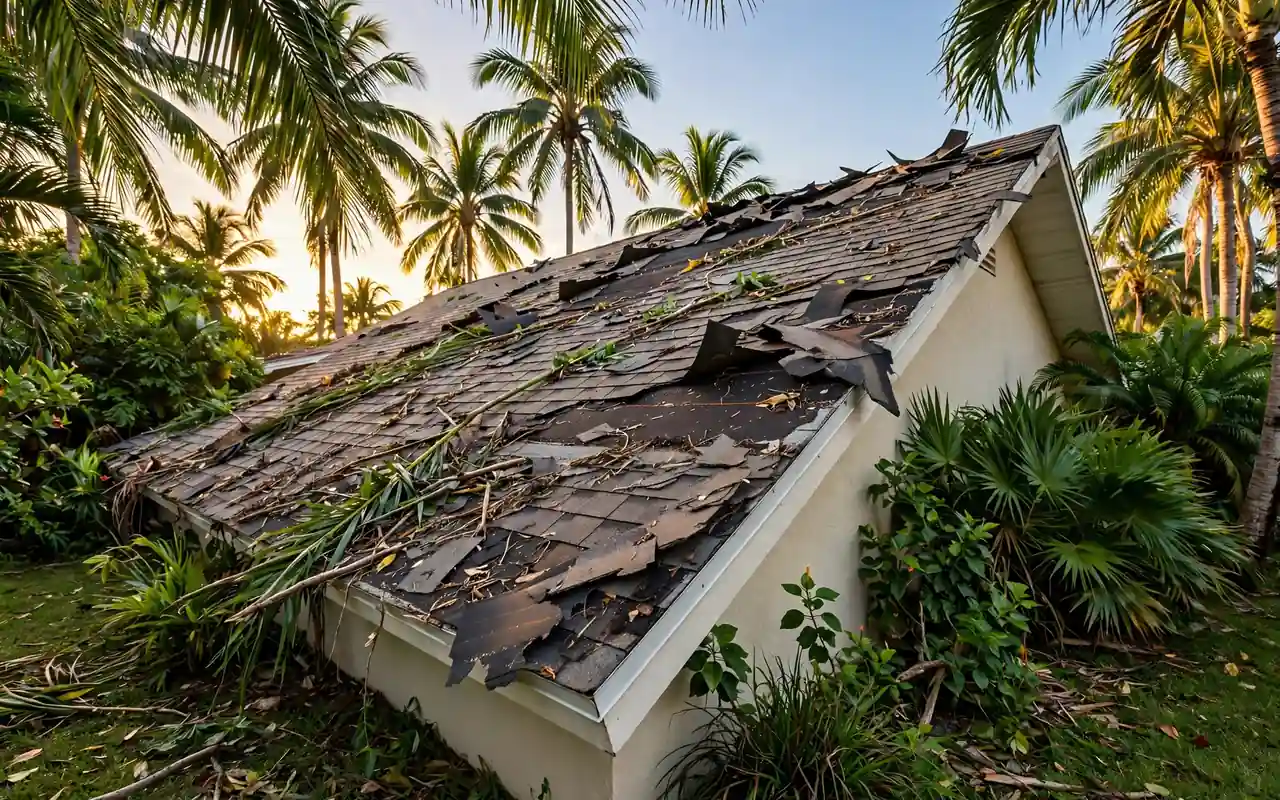
First light reveals what the night hid. Walk the property without climbing: missing shingles or tile on the ground, debris on slopes, bent vents, gutters pulled loose. Photograph each find. Then the full-roof inspection separates emergency damage from the roof's pre-existing wear, which matters twice: for the repair scope, and for the insurance record, where sudden storm damage and slow age are treated as different stories. Palm Beach County's Irma record, with thousands of claims closed without payment, is the standing lesson in documenting early and precisely.
If you also have an insurance letter, it can wait a day
A roof under an insurance age deadline that suffers storm damage has two tracks, and the emergency track goes first. Secure the home, document the damage, and let the age conversation resume once the house is dry. The storm documentation you gather in the first day becomes part of the same file, and a roofer can sequence the repair and any inspection under Florida Statute 627.7011 once the urgent work is done. Our storm damage page covers the post-storm process in full.
Frequently asked questions
Water is coming in right now. What do I do before calling?
Move people and belongings out of the drip zone, place buckets under active drips, and stay out from under any bulging ceiling. Keep clear of water near electrical fixtures. Photograph the leak and any visible damage, then call and describe where the water is entering and whether the roof is visibly open.
Will a roofer come out during the storm itself?
Roof work waits for safe conditions, since wet slopes and storm winds endanger anyone climbing. Emergency response happens in the safe windows around a storm: as it clears, at first light, or between rain bands when a roofer judges the roof workable. The call itself can happen anytime, and it places you in the response sequence.
What does an emergency repair include?
Stabilization: a fastened temporary cover over openings, correction of immediate failures where conditions allow, and confirmation that water entry has stopped. Permanent repairs and any replacement scope are decided after a full inspection, with the scope in writing.
Does homeowners insurance cover emergency roof repairs?
Insurance generally responds to sudden damage from a covered event, and emergency mitigation that prevents further damage is a standard part of that picture. Keep dated photos and any paperwork from the emergency visit. Wear and age are handled under separate rules.
How much does emergency roof repair cost?
The emergency scope is stabilization, and its scale follows the opening: a vent, a section, or a full slope. Materials run in the usual cost order from shingles through tile and metal. Ask on the call what the visit covers, and expect the permanent scope to be priced separately after inspection.
A palm fell on my roof. What order do things happen in?
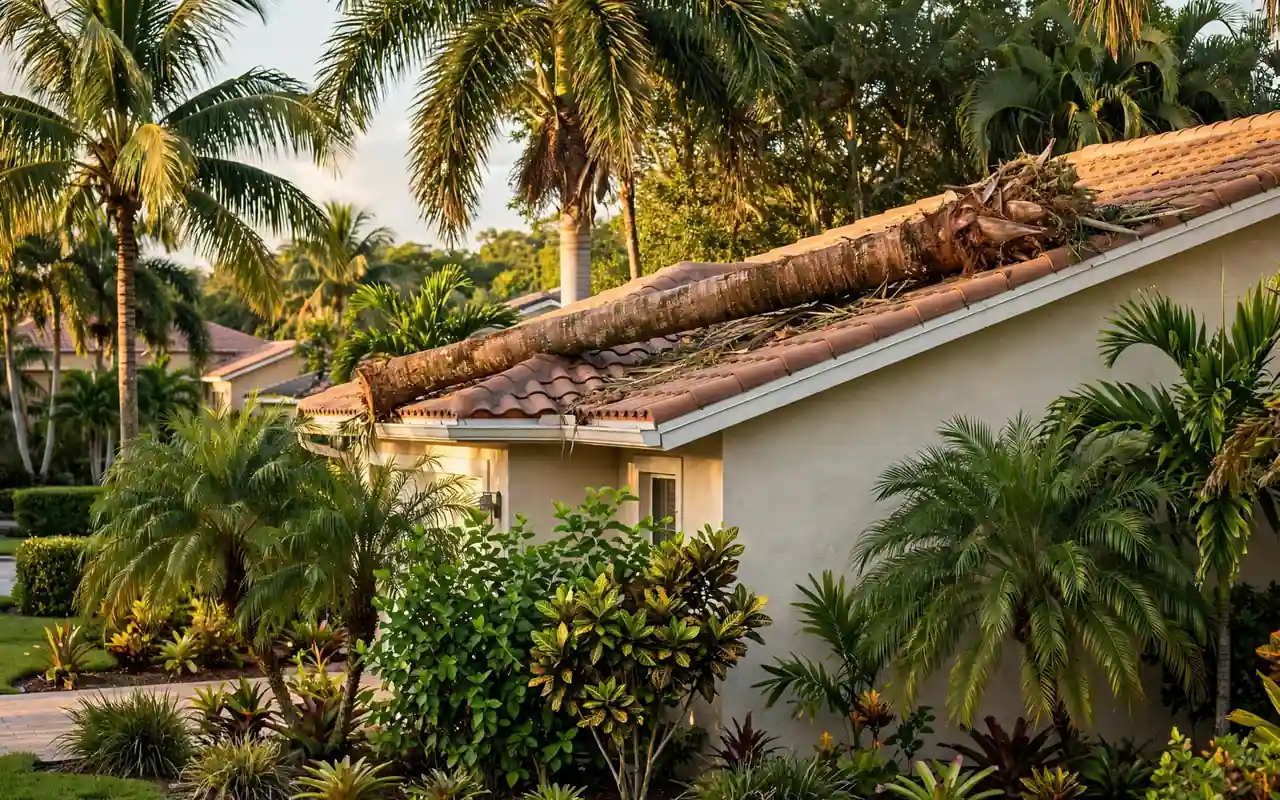
Safety around the tree and any nearby lines comes first, then structural caution: a roof carrying debris weight gets assessed before weight shifts. Securing the opening and documenting everything follow. Describe the debris and any visible sagging when you call, since that shapes the response.
Can an emergency repair turn into a full replacement?
It can, when the inspection shows the damaged area sits on a roof already at its end, or when damage crosses Florida's 25 percent repair line. The emergency work stays valuable either way: it keeps the house dry while the larger decision gets made with evidence.
Get the house dry first, then decide the rest
Say where the water is coming in and what the storm did, and let the response sequence start.
Questions about a roof, a letter, or a deadline start with a call.
Call Now{{TRACKING_NUMBER}}