
- Ponding water, seams, and drains
- Repairs for homes, condos, and towers
- Written scope before work begins
Flat Roof Repair in Palm Beach County
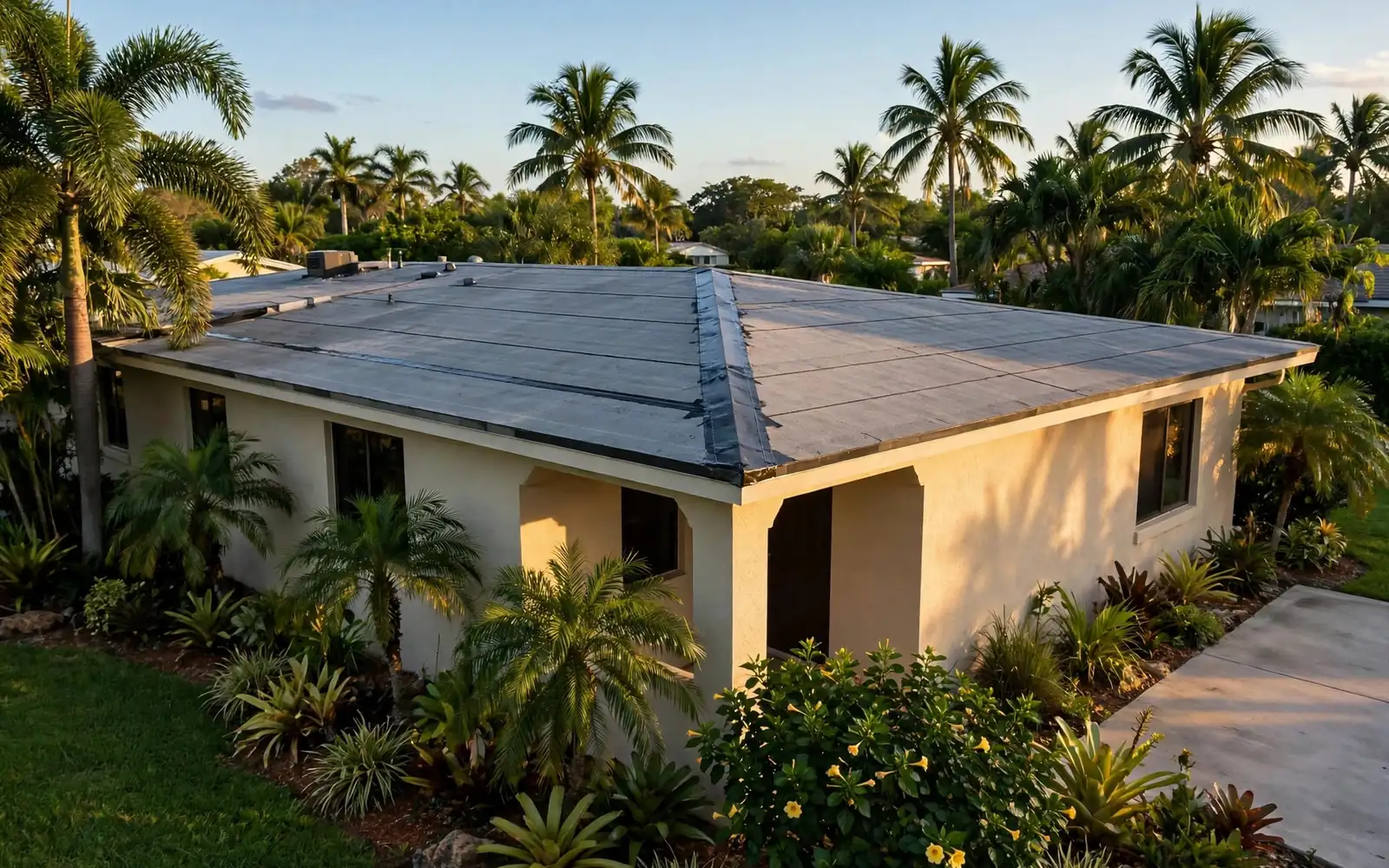
Flat and low-slope roofs fail quietly. A pitched roof sheds its problems downhill where you can see them. A low-slope roof hides its failures in seams, around drains, and under membranes, and the first sign is often a ceiling stain long after the failure began. Palm Beach County is full of these systems: condo towers on Singer Island, low-rise communities in Greenacres, Boynton Beach, and Delray Beach, plus low-slope sections on single-family homes across every city on this site. Palm Beach Roofing Help connects owners and associations with roofers who work low-slope systems daily.
The ponding test
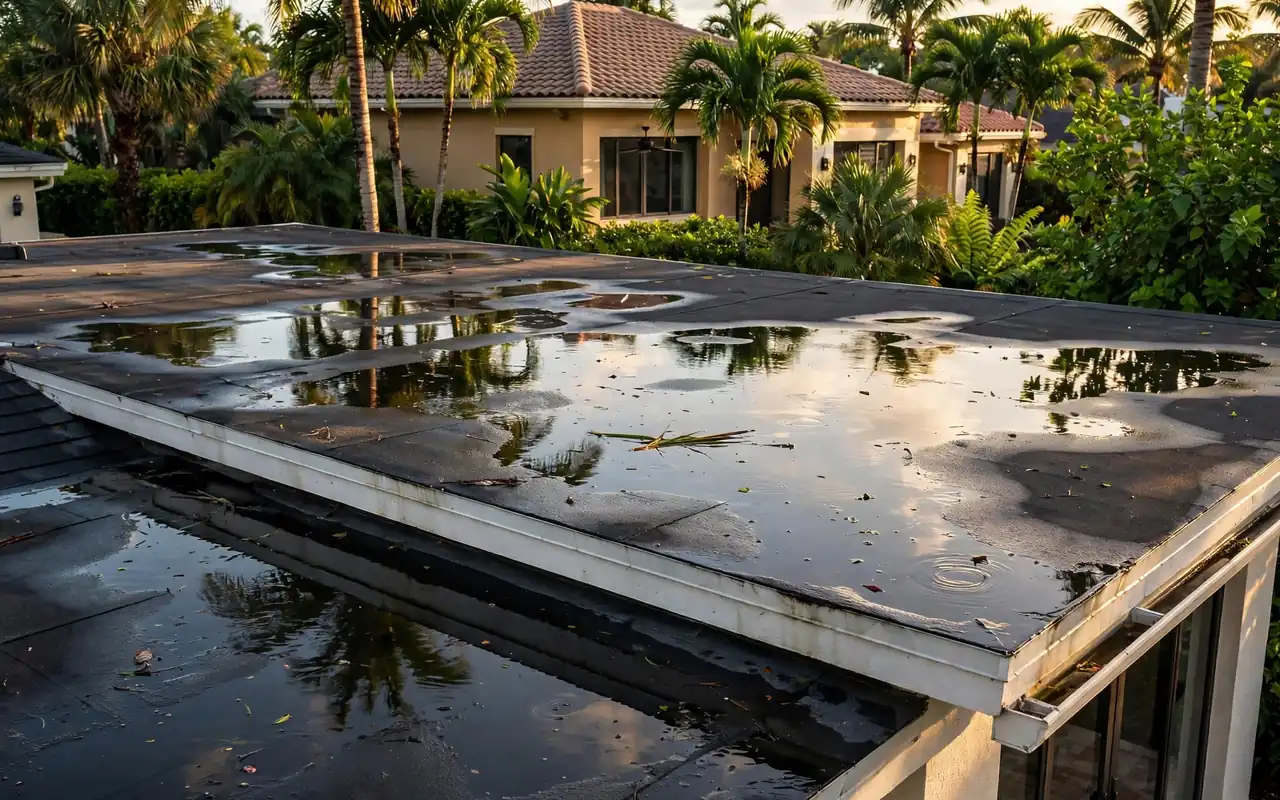
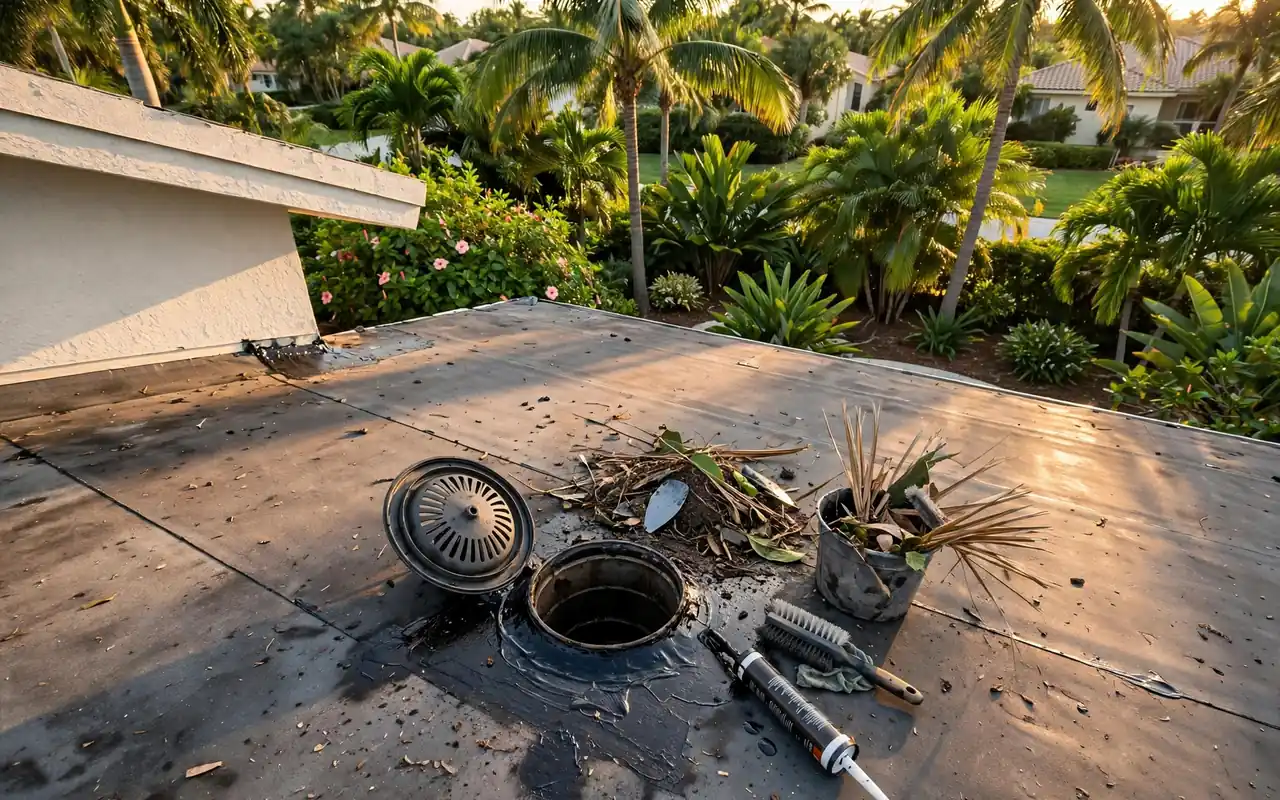
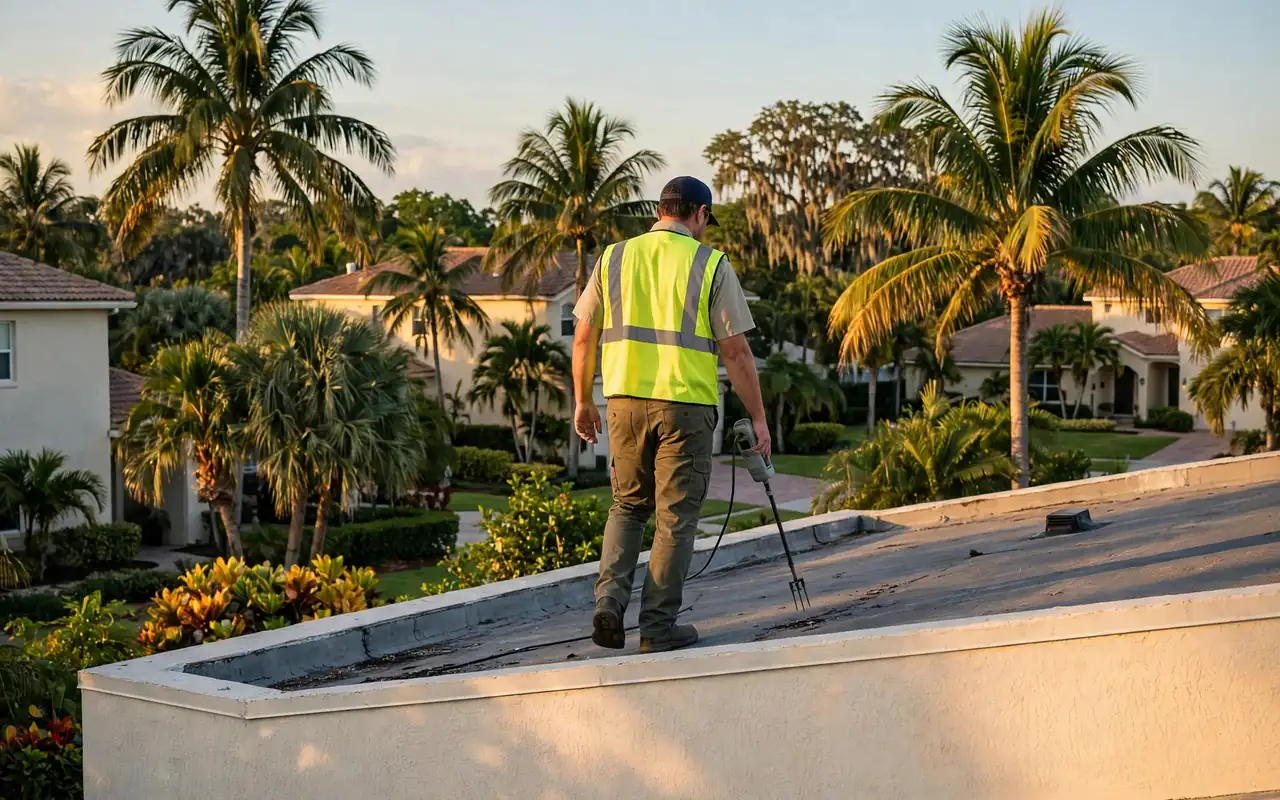
A healthy low-slope roof drains within a day or two after rain. Water still standing well after the sky clears points to a drain problem, a sagging deck area, or a slope that has lost its pitch over time. Standing water adds weight, works on seams around the clock, and finds every pinhole. Ponding is therefore the first thing a flat roof inspection maps, with photos of where the water sits and how the drains behave.
Seams on single-ply flat roofs
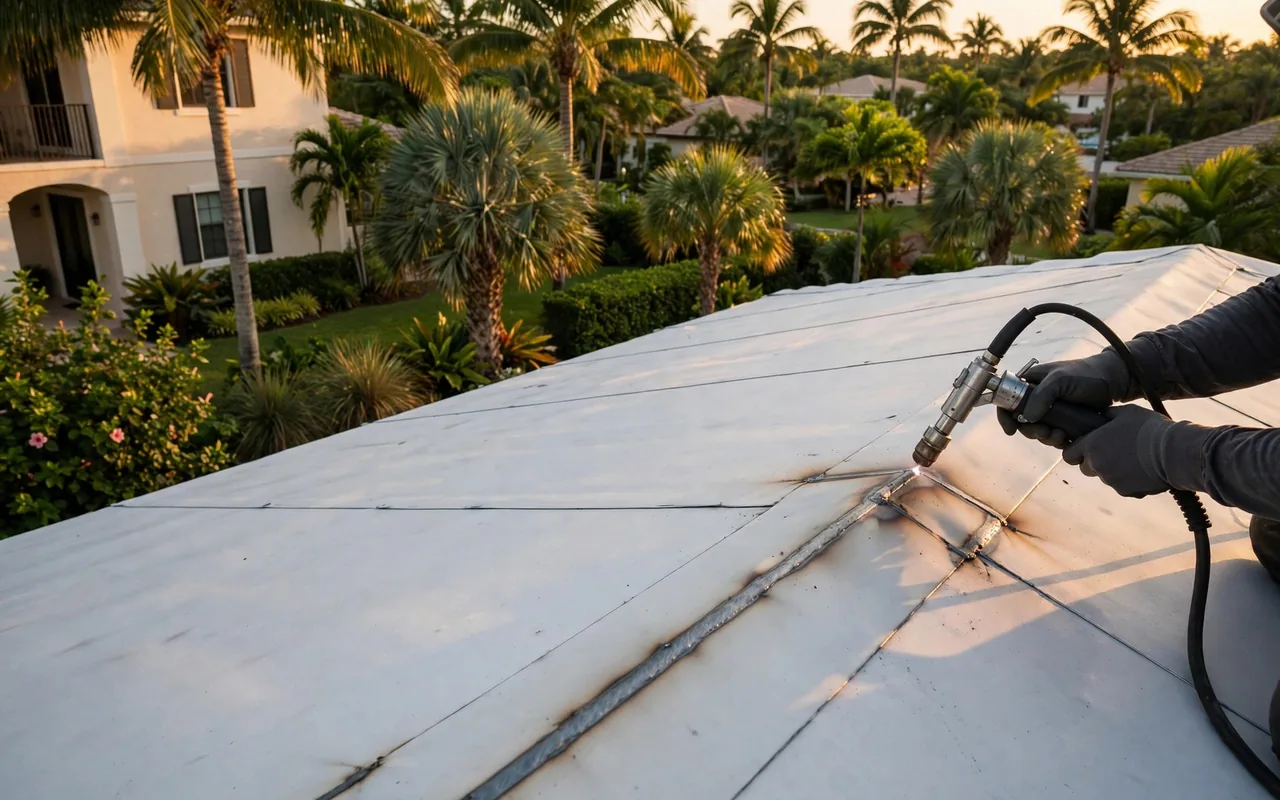
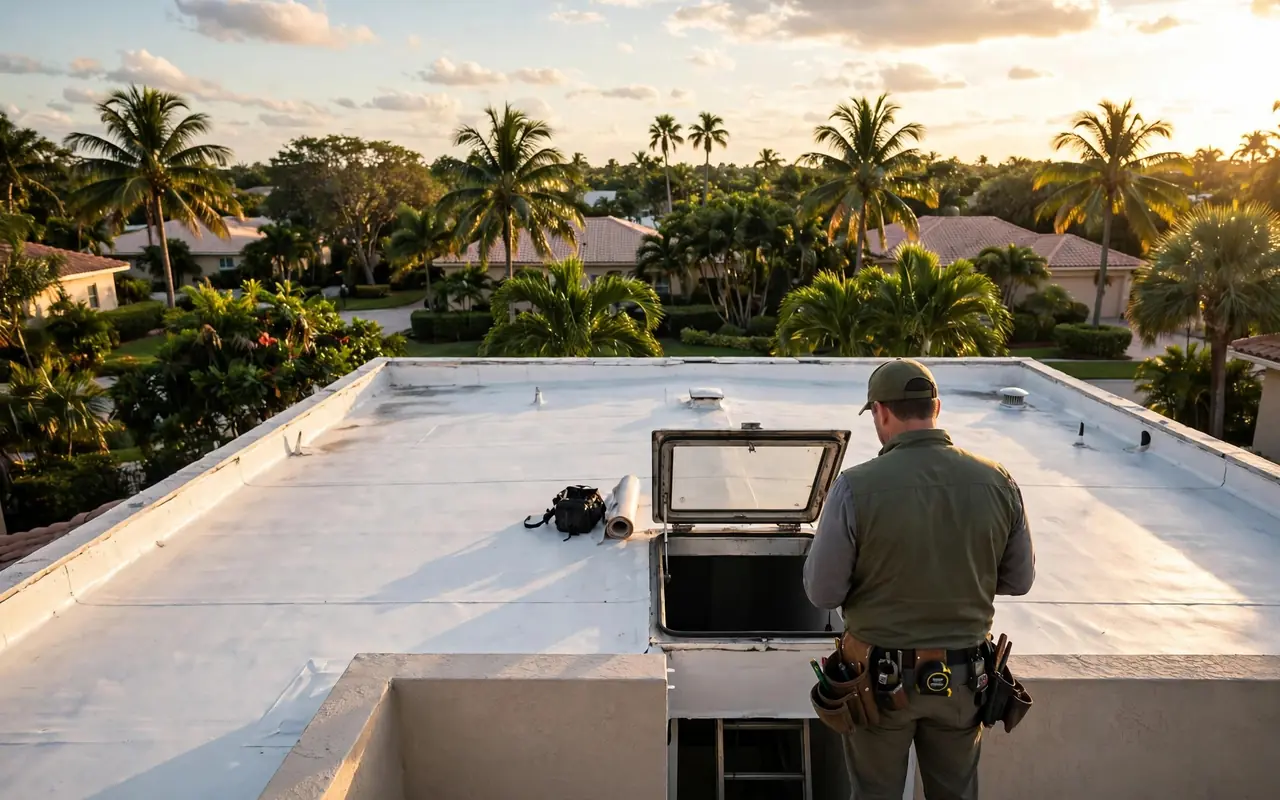
Single-ply membranes cover large areas with few joints, and those joints carry the system's waterproofing. Heat-welded or adhered seams that lift, fish-mouth, or split are the classic flat roof repair. Caught early, a seam repair restores the field. Left alone, a lifted seam feeds water under the membrane, where it travels and saturates insulation far from the entry point. Moisture probing during an inspection finds that hidden wet area before the stain map grows.
Patches, coatings, and their limits
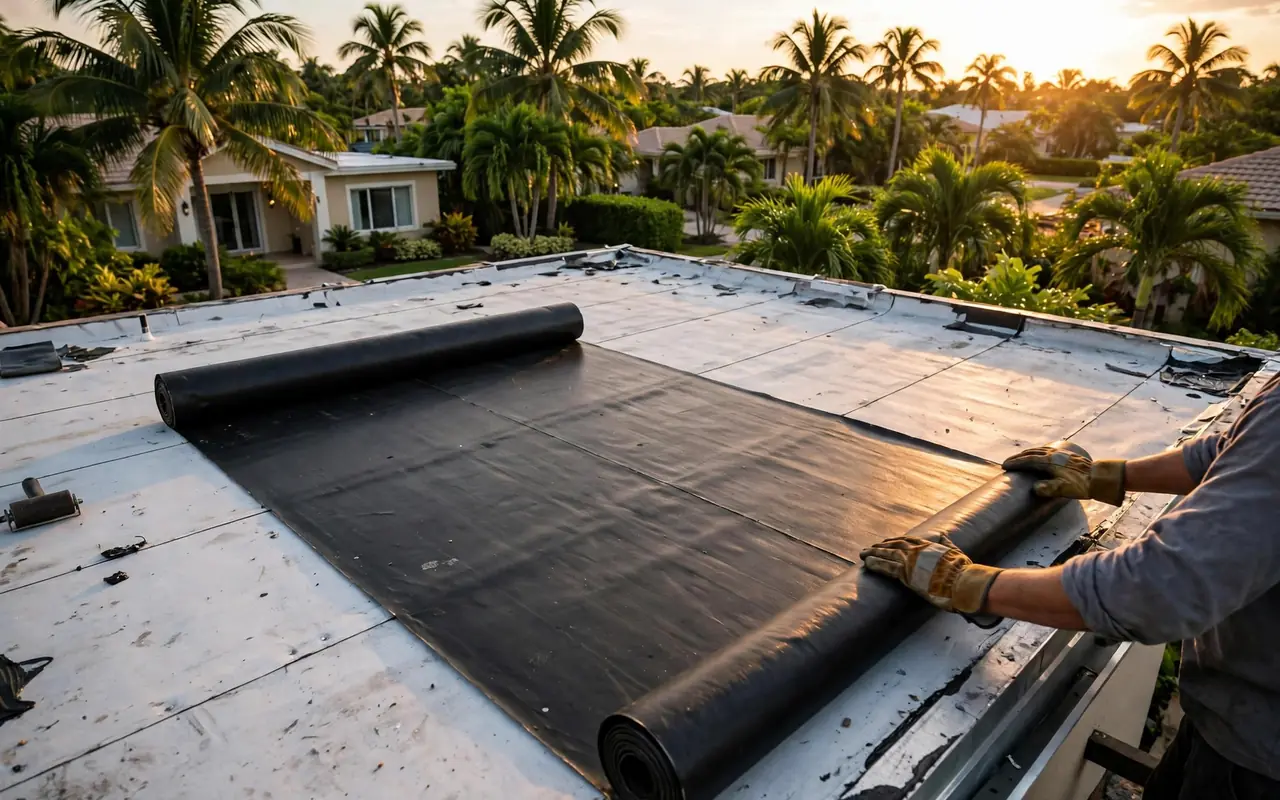
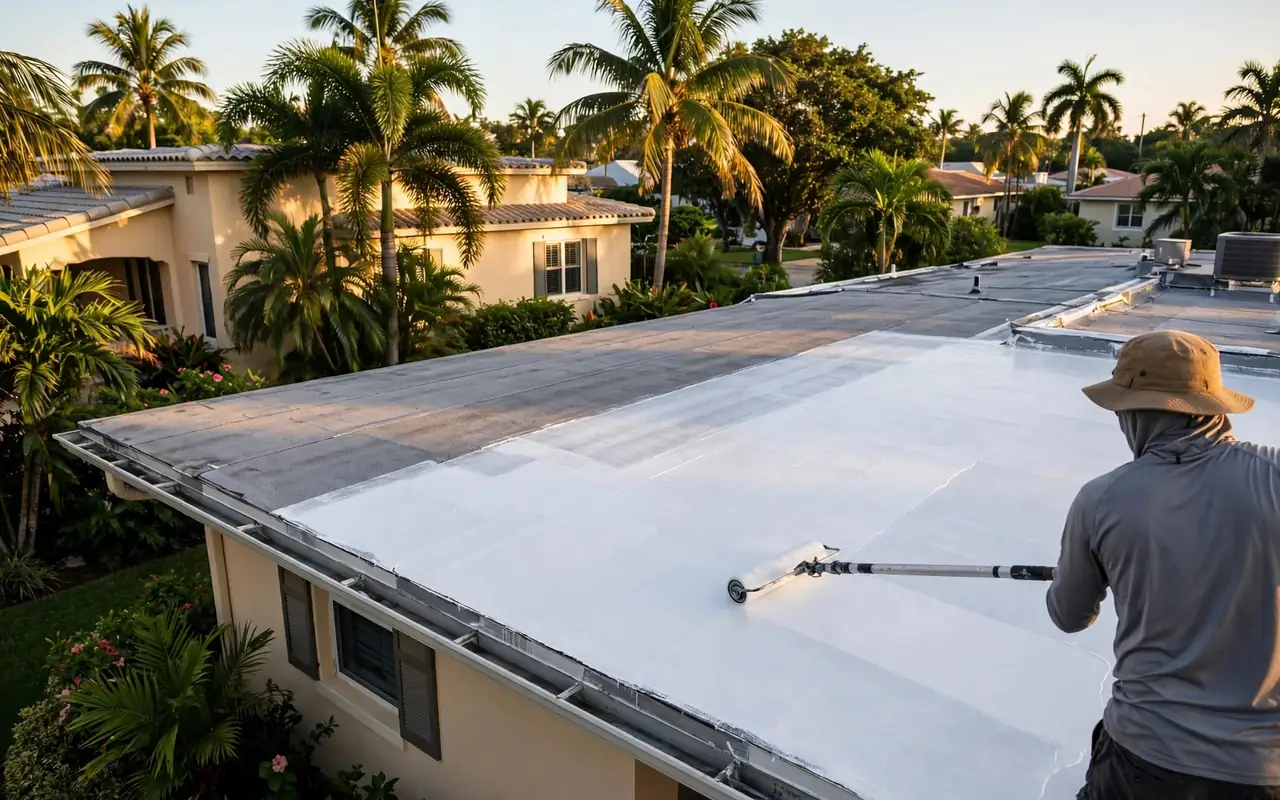
A patch on a sound membrane is a real repair. A coating can extend a roof whose field and seams still hold, adding a renewed wearing surface over the whole system. Both tools get misused when they are asked to rescue a membrane that has failed across its field. The inspection separates those cases: field condition, seam integrity, moisture under the surface, and edge metal all feed the judgment, and the written scope should say which case your roof is and why.
Condo and tower roofs run on association calendars
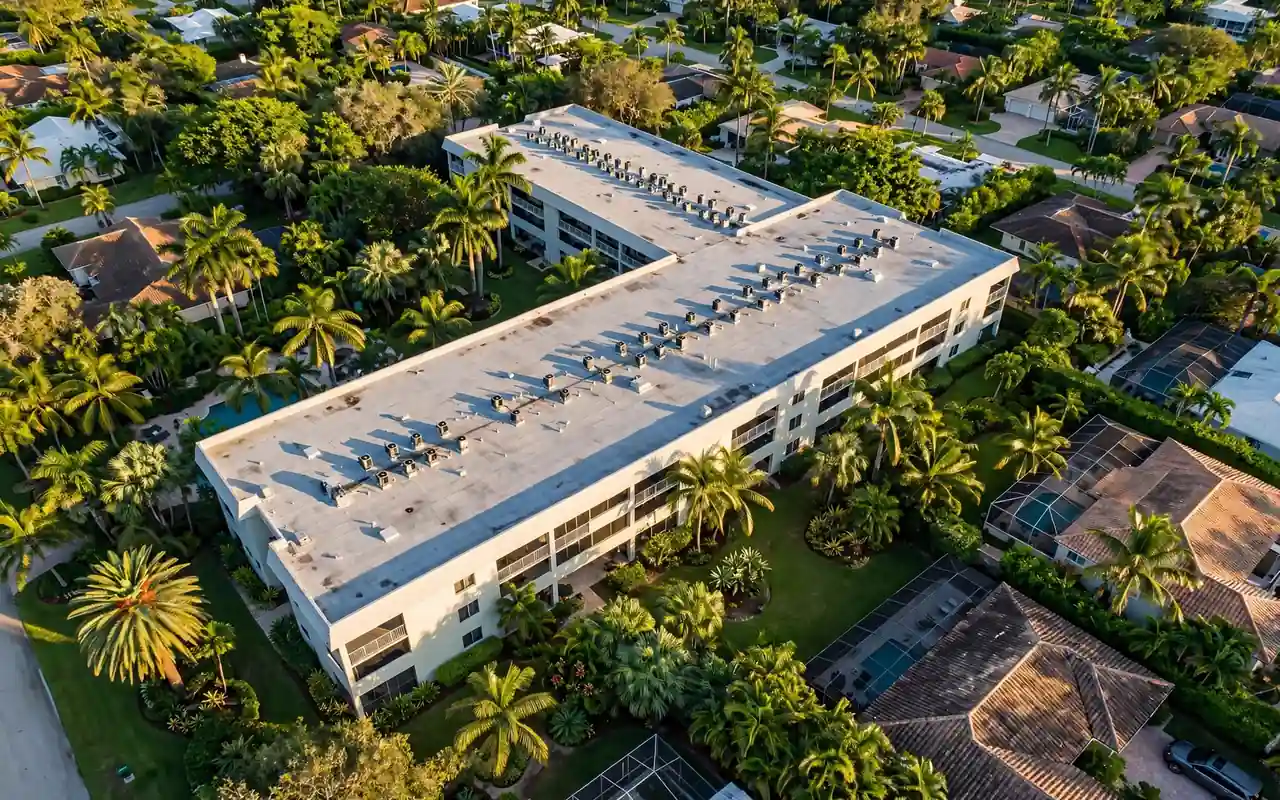
Most large flat roofs in this county belong to associations, from Singer Island towers to 55-plus communities inland. Their repairs run through boards, reserve studies, and budgets, which makes documentation the currency: an inspection report with photos, moisture findings, and a scoped set of options lets a board act in one meeting instead of three. Owners asking about a building roof can request the roof's age and its last inspection report, and a roofer can describe the documentation sequence on a call.
Flat sections on houses
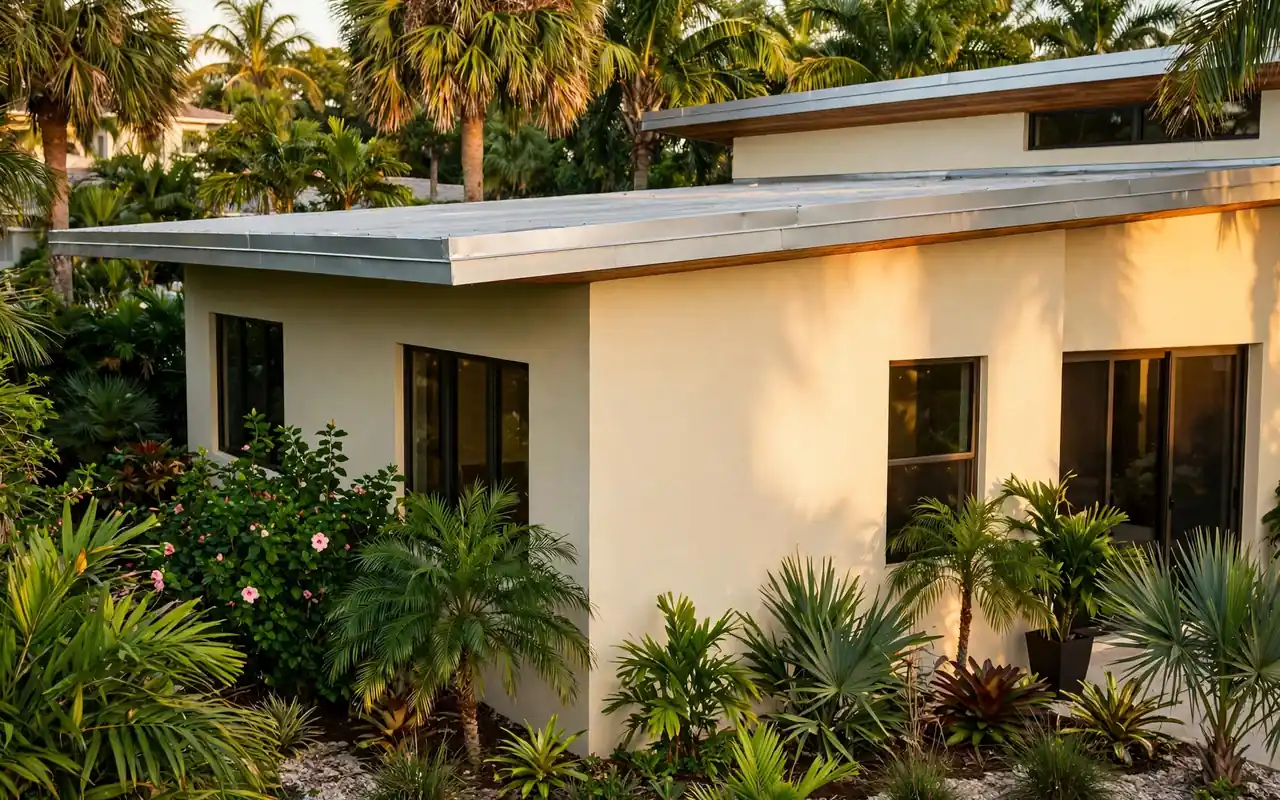
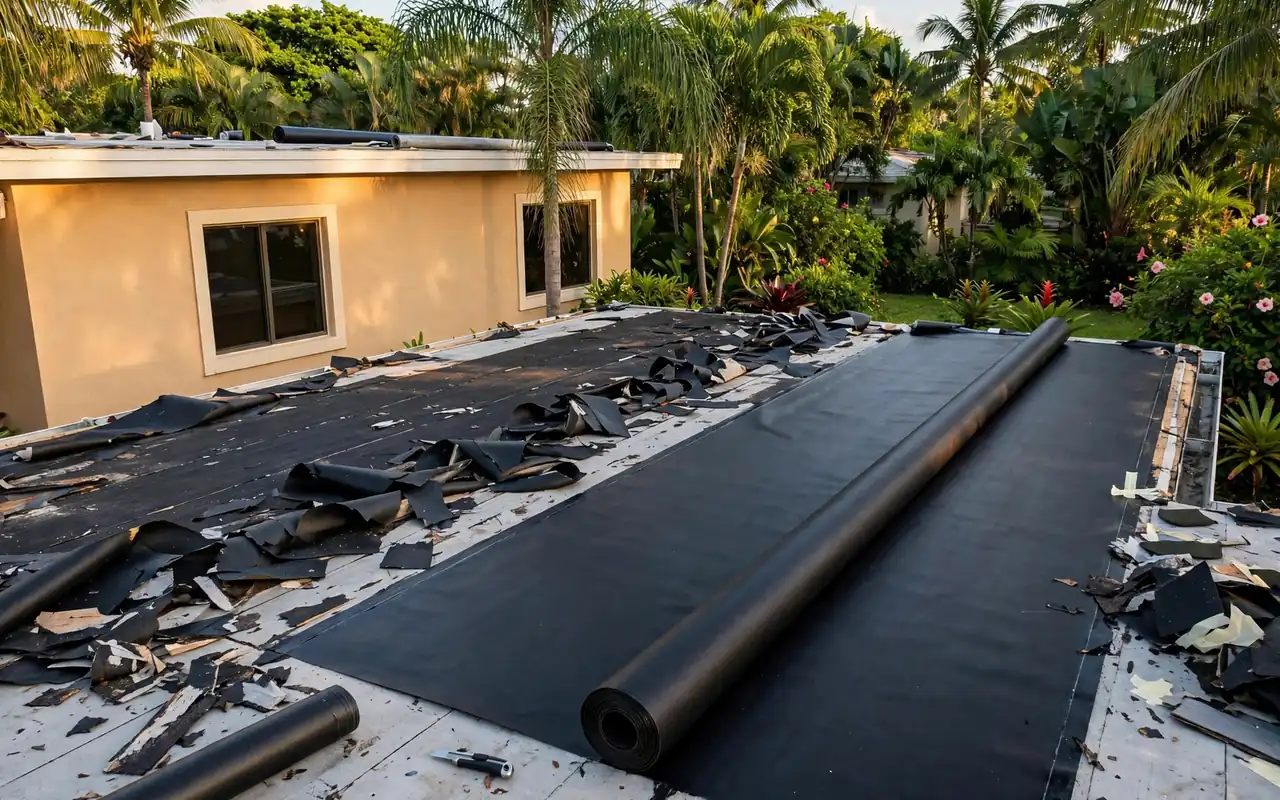
Many single-family homes here carry a low-slope section over a porch, addition, or Florida room, tied into a pitched main roof. Those tie-ins and their flashing are frequent leak sources, and they repair as their own small systems. Mention the section's location when you call, since a house call that covers both the pitched field and the flat section answers the whole roof at once.
Frequently asked questions
How do I know whether my flat roof needs a repair or a replacement?
Seam, drain, and edge failures on a membrane whose field is sound are repairs. Moisture spread under large areas, seam failures everywhere, and a tired field point toward replacement. A moisture probe inspection maps the hidden water, which is the fact that decides most flat roof cases.
What does flat roof repair cost in Palm Beach County?
Single-ply sits second in the material cost order, after shingles and before tile, metal, and slate. The real driver is scope: one seam, a drain rebuild, and a full section differ widely. Ask on the call for an inspection and a written scope for your roof's specific failure.
Why does water pond on my roof, and does it matter?
Ponding follows drain clogs, settled insulation, or slope lost over time. It matters because standing water works on seams continuously and adds structural weight. Drain and slope corrections are repairs worth doing before the membrane pays for the delay.
Can a coating save my flat roof?
A coating extends a roof whose membrane and seams remain fundamentally sound. It cannot rescue a saturated or failed field. An inspection with moisture findings tells you which roof you have before coating money gets discussed.
Does homeowners insurance cover flat roof leaks?
Insurance generally responds to sudden damage from a covered event, such as storm tearing at seams or edges. Slow seam failure and ponding wear are maintenance and age matters. Association roofs follow the association's policy. Photograph storm effects promptly, whichever roof you have.
How long will a flat roof last in Florida?
Service life varies widely by material and maintenance, and coastal exposure shortens seam and edge metal life. Regular drain clearing and seam checks are the habits that stretch a low-slope roof's years. An inspection can state your roof's remaining life in the documented form insurers respect.
Who do I call about a condo building's flat roof?
The association owns the decision, and its manager or board commissions the work. Owners can still call to understand the inspection and documentation process, which helps in conversations with the board. Associations planning work can start with the same call and ask about inspection reports built for board review.
When you call, say where the water stands and where the stains appear
Tell the roof's age, where the water stands, and where the stains appear. The inspection handles the hidden half.
Questions about a roof, a letter, or a deadline start with a call.
Call Now{{TRACKING_NUMBER}}